
Observation elements
Capture data from the environment.
Observation element is an electronic device with software containing a mechanism for data capture. The observation element operates continuously.
Purpose of the observation element: to capture and transmit data.
3 access levels to the observation element:
- Microprocessor;
- Electronic device;
- Software.
Data transmission occurs over a combined network (see the section "Combined Network" for details).
Microprocessors
Any electronic device containing an Intel or AMD microprocessor becomes an observation element (other microprocessor manufacturers may also embed backdoors: Backdoor (computing) [archive]).
A microprocessor is a computer processor where the logic for data processing and control is integrated into a single integrated circuit or set of integrated circuits. The microprocessor is controlled by embedded software (firmware). Reference: Microprocessor [archive].

Microprocessors from manufacturers (left to right): Intel, AMD, Texas Instruments.
Manufacturers embed microprocessors with software into smartphones, tablets, laptops, computers, modems, robots, household appliances, toys, security systems, pacemakers, TVs, digital watches, and other electronic devices.
Microprocessors are standalone microcomputers inside electronic devices that can be controlled remotely. Reference: Embedded software [archive]. Patent reference: US6735630B1 - Method for collecting data using compact internetworked wireless integrated network sensors (WINS) [archive].
Intel Management Engine
Intel Management Engine is an autonomous subsystem embedded in all Intel microprocessors since 2008.
Intel Management Engine operates continuously while the motherboard is powered (even if the computer is off). Intel ME has access to all top-level devices and completely bypasses the operating system. Intel ME has its own MAC and IP addresses with direct Ethernet access (part of the Ethernet traffic is redirected to Intel ME before reaching the operating system). Reference: Intel Management Engine [archive].

Intel processor.
Intel Management Engine is considered a backdoor by many recognized experts (not to be confused with Intel Active Management, reference: Intel Active Management Technology [archive]), as it has built-in full access to device memory, display, input devices, and TCP/IP stack. This means Intel ME has access to all files, display information, keyboard input, and network packet exchange (bypassing the operating system and its firewall).
Intel Management Engine leaves no traces of remote intervention on the device. Moreover, Intel ME cannot be turned off. When Intel AMT is disabled, Intel ME continues to operate.
However, researchers have discovered an undocumented way to disable Intel Management Engine called High Assurance Platform (HAP). This method involves setting a special HAP bit that puts Intel ME into shutdown mode at an early boot stage. High Assurance Platform is a program associated with the U.S. National Security Agency (NSA). Reference article: Now you, too, can disable Intel ME ‘backdoor’ thanks to the NSA [archive]. Presentation describing the program: High Assurance Platform (HAP) High Assurance Challenges [archive].
Intel has provided only general information about Intel Management Engine:
- What is Intel® Management Engine? [archive];
- Intel® Active Management Technology (Intel® AMT) and Intel® Converged Security and Management Engine (Intel® CSME) Security Updates [archive];
- Frequently Asked Questions for the Intel® Management Engine Verification Utility [archive] (this information rather confirms that Intel ME is a backdoor).
Despite expert inquiries, Intel has yet to provide comprehensive information on Intel ME's internal workings.
Intel Management Engine is a small black box; only Intel knows what's inside. A similar subsystem exists at AMD.
AMD Platform Security Processor
AMD Platform Security Processor is a subsystem embedded in AMD microprocessors since 2013.
AMD PSP is functionally equivalent to Intel Management Engine (only slightly different: AMD does have a similar backdoor, called the PSP [archive]), thus it has hidden access to nearly all parts of the electronic device it is inside. Reference: AMD Platform Security Processor [archive].

AMD processor.
Independent researchers requested AMD to open the source code of the AMD Platform Security Processor but were denied.
Others
There are microprocessors from other manufacturers, less popular and less studied, but with similar subsystems. Microprocessors from various manufacturers are embedded in more than 90% of all electronic devices. Reference: List of microprocessors [archive].
Other undocumented technologies provide unauthorized access to devices. References to known examples: Positive Technologies found an undocumented technology in Intel microchips [archive], Intel VISA: Through the Rabbit Hole // Mark Ermolov Maxim Goryachy ENG [archive], Intel VISA: Through the Rabbit Hole [archive].
Additionally, microprocessors have vulnerabilities. References to known examples: Transient execution CPU vulnerability [archive], Meltdown and Spectre [archive].
Electronic devices
Electronic device is a device made up of electronic components for converting electromagnetic energy into useful functions. References: Electrical device [archive], Smart device [archive].
Every electronic device that has a mechanism for data capture and transmission is an electronic observation element.
Satellites

The U.S. Space Force’s super high-frequency communications satellite provides secure communications for the United States and allied countries.
Satellites also transmit modulated electromagnetic fields filling space, through which passive radars capture data about living and nonliving objects (more details in the "Radars" section).
There are over 7.5 thousand active satellites in Earth orbit serving various purposes (the number constantly changes). Reference publication: UCS Satellite Database [archive].

An interactive map displays over 4,000 active satellites matched with TLE data (last updated September 1, 2022). The application was developed in the Esri lab in Redlands, California. Link to the application: Satellite explorer (Esri) [archive].
EO satellite is an Earth observation satellite used for creating satellite images (similar to aerial photographs). Reference: Earth observation satellite [archive].

EO satellite images (left to right top to bottom): MV Rubymar, sunk in the Red Sea after an attack by Houthi militants (also showing the bow sticking out of the water); Popocatépetl volcano in Mexico; Dubai center during the Fitness Challenge; part of Las Vegas with the visible Formula 1 Grand Prix track. Manufacturer’s site: BlackSky [archive].
SAR satellite is a satellite with synthetic aperture radar used for creating two-dimensional images and three-dimensional reconstructions of objects (even through clouds). References: SAR-Lupe [archive], Synthetic-aperture radar [archive]. Video by Scott Manley: Satellites Use 'This Weird Trick' To See More Than They Should - Synthetic Aperture Radar Explained [archive].

SAR satellite images (left to right top to bottom): Boston harbor; Hartsfield-Jackson Atlanta International Airport with color-coded vehicle traffic; McDonnell Douglas MD-80 planes and Airbus A300-600R jets at Roswell Air Center, New Mexico; ExxonMobil chemical plant in Singapore with a moored oil tanker. Manufacturer’s site: Capella Space [archive].
GNSS satellite is an autonomous geospatial positioning satellite used to determine the location, speed, and direction of a signal receiver. Such satellites are united into global navigation satellite systems: GPS, Galileo, GLONASS, BeiDou, IRNSS, QZSS. Reference: Satellite navigation [archive]. U.S. government site on the global positioning system: GPS.gov: Other Global Navigation Satellite Systems (GNSS) [archive].

Trajectory obtained via positioning using GNSS data.
COMINT satellite is a satellite for intercepting communication electromagnetic emissions used for eavesdropping on text and voice messages. References: Signals intelligence [archive], Canyon (satellite) [archive].

Interface of the BlackRock™ workstation used for COMINT processing of over 100 simultaneous signals. Manufacturer’s materials: BLACKROCK™ Communications Intelligence System [archive].
ELINT satellite is a satellite detecting non-communication electromagnetic emissions used to create a map of electromagnetic fields. Reference: Signals intelligence [archive]. Manufacturer’s site for satellites: Satellite constellations for spectrum monitoring [archive].

An electromagnetic emission map compiled by HawkEye 360 software using Pathfinder satellites (over 11 million signals in 2019). Manufacturer’s site: HawkEye360: One-year anniversary of pathfinder commissioning [archive].
EO, SAR, GNSS, COMINT, and ELINT satellites are sufficient to capture the required volume of data for overall situational awareness, but other satellites also exist.
Radars
Radar is an aggregate of electronic devices that uses a modulated electromagnetic field to capture data about distance, direction, speed, and geometric parameters of living objects, technical devices, electronic devices, as well as terrain relief and meteorological formations at distances up to 5500 km. References: Radar [archive], List of radar types [archive].

Radars (left to right top to bottom): C-band radar with 3-megawatt power and a 50-foot parabolic antenna; long-range radar antenna used for tracking space objects and ballistic missiles; antenna of the US Navy mobile over-the-horizon radar station; antenna of the OU-PRIME research polarimetric radar.
Compact (active) radar is a small radar system with a wide coverage area, allowing the capture of data about living and nonliving ground, surface, and flying objects at distances up to 3500 meters. Reference: Compact surveillance radar [archive].

Magos compact radars provide detection of living objects up to 800 meters and vehicles up to 1000 meters in any weather and cluttered conditions. Manufacturer’s website: Magos Radars [archive].
Examples of using Magos compact radars: Presenting MAGOS Integrated AI Target Classifier [archive]. Installation examples of Magos compact radars: Installation examples [archive].
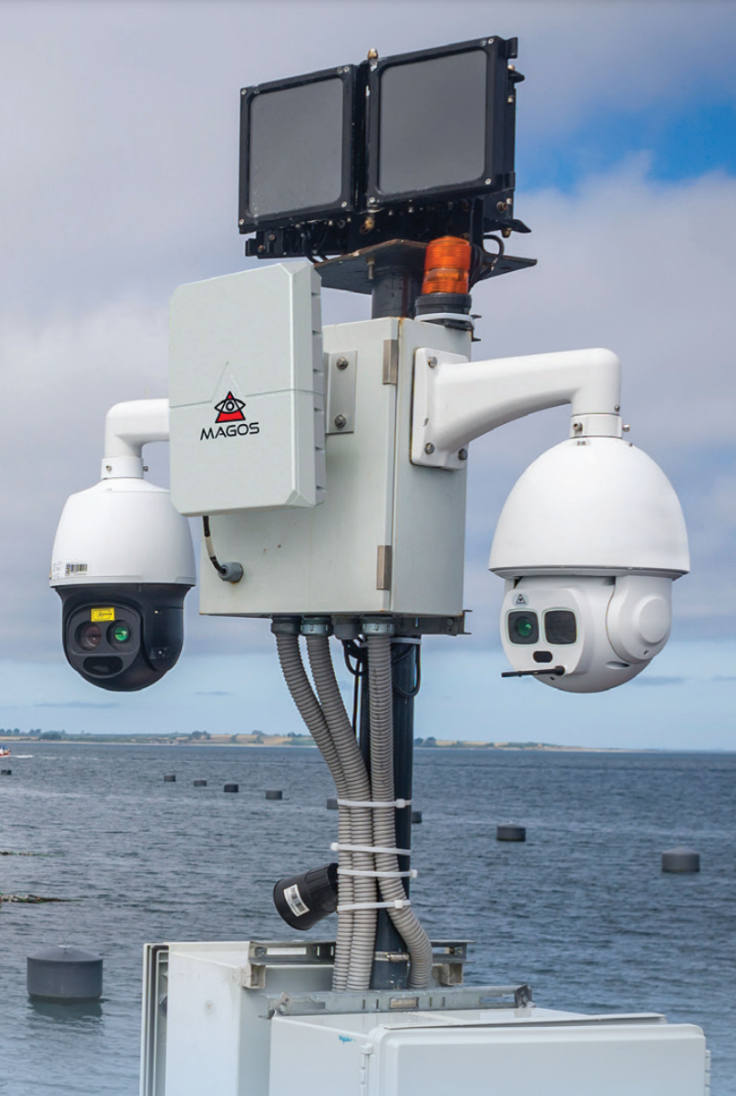
Example of Magos compact radar deployment.
Some compact radars capture data on breathing and heartbeat of living objects in real time. References: Continuous-wave radar [archive], MmWave (millimeter waves) [archive].
References to scientific publications and example:
- Method for Distinguishing Humans and Animals in Vital Signs Monitoring Using IR-UWB Radar [archive];
- Through-Wall Multi-Subject Localization and Vital Signs Monitoring Using UWB MIMO Imaging Radar [archive];
- (PDF) Radar methods of detection of human breathing and heartbeat [archive];
- UWB Radar Sensor Heartbeat & Respiration Check [archive].
Patent reference:
Passive radar is a hard-to-detect radar system that evaluates reflections of external electromagnetic field sources (GNSS, television, radio, cellular communication, Wi-Fi) to capture data about living and nonliving ground, surface, and flying objects at distances up to 250 km. Reference: Passive radar [archive].

Examples of passive radars from Hensoldt. Manufacturer’s website: Twinvis® Passive radar Silent surveillance of silent objects [archive].
Video explaining the working principle of Hensoldt passive radar: HENSOLDT Twinvis Passive Radar – See without being seen [archive].
SatCast passive radar (satellite broadcast) uses existing satellite broadcasting networks (GNSS, television, radio) to capture data about nonliving ground, surface, and flying objects.
References to scientific publications:
- BeiDou-Based Passive Radar Vessel Target Detection: Method and Experiment via Long-Time Optimized Integration [archive];
- Passive Bistatic Ground-Based Synthetic Aperture Radar: Concept, System, and Experiment Results [archive];
- Passive Forward-Scattering Radar Using Digital Video Broadcasting Satellite Signal for Drone Detection [archive];
- Enhanced Passive GNSS-Based Radar Imaging Based on Coherent Integrated Multi-Satellite Signals [archive].
Patent references:
- WO2006129306A2 - Passive radar utilizing space-borne digital electromagnetic illuminators [archive];
- US20130050024A1 - Bistatic radar system using satellite-based transmitters with ionospheric compensation [archive].
TV/Radio passive radar uses existing broadcasting networks for capturing data on living and nonliving ground, surface, and flying objects.
References to scientific publications:
- Indoor Human Detection Systems Using VHF-FM and UHF-TV Broadcasting Waves [archive];
- (PDF) Passive bistatic radar using digital video broadcasting–terrestrial receivers as general-purpose software-defined radio receivers [archive];
- Multistatic synthetic aperture imaging of aircraft using reflected television signals [archive];
- Passive bistatic radar using digital terrestrial television broadcasting signal for subsurface target detection [archive];
- High Speed Passive Radar Receiver with Application to Digital Television Signals [archive];
- High Bandwidth, Multi-Purpose Passive Radar Receiver Design For Aerospace and Geoscience Targets [archive];
- (PDF) High range resolution DVB-T Passive Radar [archive];
- Experimental Research of Dual-Polarization Passive Radar Based on DTTB Signal [archive];
- Silent Sentry:Innovative Technology for Passive, Persistent Surveillance [archive];
- [PDF] Passive Radar using COFDM (DAB or DVB-T) Broadcasters as Opportunistic Illuminators [archive];
- Polarisation experimental research of passive radar based on digital television signal [archive];
- Experimental results of DTTB-based passive radar with polarisation diversity reception [archive];
- Robust Weighted l 1,2 Norm Filtering in Passive Radar Systems [archive].
Patent references:
- US7859463B2 — Method of detection in bistatic mode using non-cooperative passive radio transmissions [archive];
- US8902102B2 — Passive bistatic radar for vehicle sense and avoid [archive].
LTE passive radar (and also GSM, 2G, 3G, 4G, 5G) uses existing LTE cellular networks to capture data about living and nonliving ground, surface, and flying objects.
References to scientific publications:
- (PDF) LTE-based Passive Radars and Applications: A Review [archive];
- (PDF) LTE-Based Passive Radar for Ground Moving Target Detection [archive];
- Moving Target Detection by Using New LTE-Based Passive Radar [archive];
- Experimental investigation on target detection and tracking in passive radar using long‐term evolution signal [archive];
- Target Detection and DOA Estimation for Passive Bistatic Radar in the Presence of Residual Interference [archive].
Patent reference:
Wi-Fi passive radar uses existing wireless internet Wi-Fi networks to capture data on living and nonliving ground, surface, and flying objects, as well as for determining body position, gestures, breathing, and heartbeat of living objects (similar impulse radars exist).
References to scientific publications, lectures, and examples:
- Celeno: Wi-Fi Doppler imaging [archive];
- A Lightweight Passive Human Tracking Method Using Wi-Fi [archive];
- (PDF) Localization and tracking of moving targets with WiFi-based passive radar [archive];
- Through-The-Wall Sensing of Personnel Using Passive Bistatic WiFi Radar at Standoff Distances [archive];
- A real-time high resolution passive WiFi Doppler-radar and its applications [archive];
- (PDF) Wireless Health Monitoring using Passive WiFi Sensing [archive];
- Passive WiFi Radar for Human Sensing Using A Stand-Alone Access Point [archive];
- Using Wi-Fi Signal as Sensing Medium: Passive Radar, Channel State Information and Followups [archive];
- Physical Activity Sensing via Stand-Alone WiFi Device [archive];
- (PDF) Joint Activity Recognition and Indoor Localization With WiFi Fingerprints [archive];
- Passive Radar for Opportunistic Monitoring in E-Health Applications [archive];
- Wi-Fi Can Be Used to Photograph Rooms Through Walls [archive];
- Holography of Wi-fi Radiation [archive];
- See through walls with WiFi! [archive];
- Experimental approach for seeing through walls using Wi-Fi enabled software defined radio technology [archive];
- IQ-Data-Based WiFi Signal Classification Algorithm Using the Choi-Williams and Margenau-Hill-Spectrogram Features: A Case in Human Activity Recognition [archive];
- Through-Wall Human Pose Estimation Using Radio Signals [archive];
- Researchers use wireless network to monitor breathing, could save lives [archive];
- EQ-Radio: Emotion Recognition using Wireless Signals [archive];
- WiFi signal based human activity recognition (MobiCom 2015) [archive];
- X-Ray Vision for Robots: Seeing Through Walls with Only WiFi [archive];
- WiSee: Wi-Fi signals enable gesture recognition throughout entire home [archive];
- Wi-Fi 'radar' can see through walls [archive];
- Through-wall person identification from candidate video footage using WiFi [archive];
- MobiSys 2020 - Sensing with WIFI [archive];
- Atheros Wifi Router CSI Data Realtime Spectrogram (Plot Both Time/Frequency Domain) [archive];
- Capturing a Human Figure Through a Wall using RF Signals [archive];
- Human Activity Detection Using WiFi Signals and Deep Networks [archive];
- MobiCom 2015 - Understanding and Modeling of WiFi Signal Based Human Activity Recognition [archive].
Patent references:

Screenshot from video demonstration of Wi-Fi Doppler Imaging capabilities. Location detection of a living object occurs using a single Wi-Fi access point with four antennas (shown bottom left). Body movement analysis and pose classification occur via Doppler spectrogram decoding (shown bottom right). Manufacturer’s site: Celeno: Wi-Fi Doppler imaging [archive].
Portable radar is a lightweight radar system that requires no transport vehicles for transportation or operation, allowing capture of data on living and nonliving ground, surface, and flying objects at distances up to 1500 meters. Reference: Man-portable radar [archive].

Portable ISR radar by Echodyne. Manufacturer’s site: Portable ISR Radar [archive]. Article in GeekWire: Echodyne raises $20M from Bill Gates and others as surveillance radar gains traction [archive].
Radars from various manufacturers:
- Magos [archive];
- Hensoldt [archive];
- Celeno [archive];
- Vayyar [archive];
- Cobalt Solutions [archive];
- Teledyne Flir [archive];
- Dahua [archive];
- Rockwell Collins [archive];
- L3Harris [archive];
- Blighter [archive];
- SpotterRF [archive];
- Navtech [archive];
- TagMaster [archive];
- Echodyne [archive];
- Elta Systems [archive];
- BSTI [archive];
- InnoSenT [archive];
- UMAIN [archive];
- Chinese manufacturers [archive].
Many other manufacturers also exist.
Receivers
Receiver is an electronic device that converts a modulated electromagnetic field into visual, audio, or digital information. Reference: Radio receiver [archive].
Receivers capture modulated electromagnetic fields at distances from the source up to 35,000 km (and beyond). Increased reception range is achieved by using sensitive antennas (manufacturer’s site: Rohde & Schwarz Antennas [archive]) and internal receiver components (repeaters, amplifiers, and others).

Receivers.
Receivers and systems (measuring, SDR) use modulated electromagnetic fields in real time to capture data about living, ground, surface, and flying objects, as well as the transmitted information.
References to scientific publications, lectures, and examples:
- R&S®NESTOR cellular network analysis software [archive];
- Building a passive IMSI catcher [archive];
- Compromising emanations: eavesdropping risks of computer displays [archive];
- Screen Gleaning: A Screen Reading TEMPEST Attack on Mobile Devices Exploiting an Electromagnetic Side Channel [archive];
- (PDF) Possibilities of Electromagnetic Penetration of Displays of Multifunction Devices [archive];
- Leveraging Electromagnetic Side-Channel Analysis for the Investigation of IoT Devices [archive];
- A Survey of Electromagnetic Side-Channel Attacks and Discussion on their Case-Progressing Potential for Digital Forensics [archive];
- TempestSDR: An SDR tool for Eavesdropping on Computer Screens via Unintentionally Radiated RF [archive];
- Rohde & Schwarz Demonstrates TEMPEST Receiver [archive];
- GRCon21 - gr-tempest: Spying Video Interfaces Through Electromagnetic Emanations [archive];
- László Miklós Bíró - Tempest, the hidden source of data leakage [archive];
- Reception and decoding of 433 MHz signals using the RTL-SDR receiver [archive];
- Decoding GSM using SDR and GR-GSM [archive];
- All Your Radio Frequencies Are Mine. Part 1, All Your Radio Frequencies Are Mine. Part 2, All Your Radio Frequencies Are Mine. Part 3 [archive];
- NDSS 2021 Screen Gleaning: Screen Reading TEMPEST Attack on Mobile Devices Exploiting a Side Channel [archive];
- Keystroke auto-detection [archive];
- Information Leakage Threat via EM Emanation for Tablet PCs [archive];
- I Hacked Into My Own Car [archive];
- Hacking and intercepting radio devices [archive];
- Side-Channel Analysis Demo: Mobile Device [archive];
- TEMPEST - BBC report on Van Eck Phreaking [archive].
Receivers and systems (measuring, SDR) also use side modulated electromagnetic fields and re-radiation from living objects, electronic and mechanical devices, connecting wires, informational and electrical networks, unconnected wires, metal structures, and other environment elements to capture data about living and nonliving objects.
References to publications, lectures, and examples:
- Electromagnetic attack [archive];
- Computer and network surveillance [archive];
- Whispering devices: A survey on how side-channels lead to compromised information [archive];
- Using the RF-imposition method to organize channels for leakage of digital data processed by computer equipment [archive];
- Detection of stray electromagnetic radiation and interference using the Legend hardware and software system [archive];
- Online course: “Systemic approach to building information security systems” [archive].
Measuring receiver is a high sensitivity receiver for measuring characteristics of modulated electromagnetic fields over a wide frequency range, used to convert modulated electromagnetic fields into visual, audio, or digital information. Reference: Measuring receiver [archive].

Measuring receivers (left to right): R&S®FSWT [archive], Keysight Technologies N9040B [archive], Tektronix RSA5000 [archive], Rigol RSA5000 [archive], Anritsu MS2850A [archive], Siglent SSA3075X-R [archive].
Example of converting modulated electromagnetic field from a laptop monitor to digital and visual information using the R&S®FSWT measuring receiver: Rohde & Schwarz Demonstrates TEMPEST Receiver [archive]. Reference: Tempest (codename) [archive]. General article: What is TEMPEST? [archive]. Scientific article on evaluating font security against electromagnetic eavesdropping using R&S®FSWT measuring receiver: Assessing the Security of TEMPEST Fonts against Electromagnetic Eavesdropping by Using Different Specialized Receivers [archive].

Monitor of the R&S®FSWT measuring receiver after converting modulated electromagnetic field from a laptop monitor into visual information. This phenomenon is called "Van Eck phreaking." References: Van Eck phreaking [archive], Tempest (codename) [archive]. 1985 article by Wim Van Eck: Electromagnetic Radiation from Video Display Units: An Eavesdropping Risk? [archive].
Measuring system is a measuring receiver connected with additional antennas, cameras, microphones, radars, filters, control unit, amplifier, switches, and other components for more efficient reception and conversion of modulated electromagnetic fields into visual, audio, or digital information.

Measuring systems (left to right): DSI 1550 [archive], Intriple TEMPEST Laboratory [archive], R&S®TS8996 RSE [archive].
Example of converting modulated electromagnetic field from a laptop monitor into visual information using a measuring system: Tempest [archive]. Demonstration of some measuring system components: SEEI channel [archive].

Control panel of the Rohde & Schwarz measuring system.
Measuring receivers and systems are used in signals intelligence. References: Signals intelligence [archive], Electronic intelligence [archive], Measuring receiver [archive]. Manufacturer sites for measuring receivers and systems Rohde & Schwarz: Electromagnetic warfare [archive], Radar interception and analysis (ELINT) [archive], Wide area reconnaissance (COMINT) [archive], Countering threats early on — Intelligence, surveillance and reconnaissance from a single source [archive].
SDR receiver is a receiver whose internal components (mixers, filters, amplifiers, modulators, demodulators, detectors, and others) are implemented via software. Reference: Software-defined radio [archive].

SDR receivers (left to right top to bottom): SPECTRAN V6 Command Center [archive], SPECTRAN V6 XFR PRO [archive], SPECTRAN V6 X [archive], Malahit-DSP, Ubertooth One, YARD Stick One, NESDR SMArt HF Bundle, NESDR Nano 3 USB OTG, HackRF One, RTL-SDR, RTL-SDR TV Tuner, KiwiSDR. List of SDR devices: List of software-defined radios [archive].
Example of converting modulated electromagnetic field from a computer monitor and video card into visual information using SDRplay receiver: Intercepting images from a monitor via radio channel using TempestSDR (SEEI) [archive].
Examples of converting modulated electromagnetic fields into visual information with SDR receiver SPECTRAN:
- 3G UMTS REALTIME Spectrum [archive];
- Aaronia RTSA Suite PRO Realtime Analog Video Decoder [archive];
- Preview: Aaronia Demo-File "DJI Phantom 4 Drone Detection" 88MHz RTBW [archive];
- Decoding a Car Key (GFSK Decoding) with a Aaronia SPECRAN V6 Real-Time Spectrum Analyzer [archive].
Example of building a passive IMSI interceptor to capture mobile computer data with an SDR receiver: Building a passive IMSI catcher [archive].
SDR system is an SDR receiver connected to a computer with necessary software, antennas, cameras, microphones, radars, transverter, switches, and other components for more efficient reception and conversion of modulated electromagnetic fields into visual, audio, or digital information.

Example of transforming SDR receiver SPECTRAN V6 Command Center [archive] into an SDR system specialized in "drone detection" at distances up to 50 km. Manufacturer’s site: AARTOS Drone Detection System [archive].
Example of using the Aaronia SDR system: Aaronia AARTOS Drone Detection System / Detect and Stop UAV's [archive]. Operating principle: AARTOS Drone Detection System [archive].

SDR system Aaronia AG DDS [archive].
Other receivers also exist.
Television and radio broadcasting towers
Television and radio broadcasting tower is an aggregate of electronic devices, support structure, and antennas that transmit modulated electromagnetic fields over distances up to 130 km (technically possible further). References: Radio masts and towers [archive], Ostankino Tower [archive], Lattice tower [archive], 30107 KM [archive], 3803 KM [archive].

Television and radio broadcasting towers (left to right top to bottom): Ostankino, Tokyo, Stuttgart, Penza, Vorkuta, WSB-TV in Atlanta (USA).
Television and radio broadcasting towers transmit modulated electromagnetic fields filling space, through which passive radars capture data about living and nonliving objects (more details in the "Radars" section).
There are over 5 million television, radio broadcasting, and cellular communication towers worldwide. Reference reports:
Cell towers

Cell towers.
Cell towers capture data about mobile devices in real time using multilateration, triangulation, and embedded radar. Reference: Mobile phone tracking [archive]. Scientific articles: Outdoor location tracking of mobile devices in cellular networks [archive], (PDF) LTE Positioning Accuracy Performance Evaluation [archive]. Qualcomm Technologies publication: 5G: Bringing precise positioning to the connected intelligent edge [archive].
Patent references:

Diagram of embedded radar from patent US11181631B2 (link above).
Cell towers transmit modulated electromagnetic fields filling space, through which passive radars capture data about living and nonliving objects (more details in the "Radars" section).
Cell towers are used for through-wall audio surveillance. Patent references: US20050220310A1 — Technique and device for through-the-wall audio surveillance [archive] (at higher power, range can reach thousands of meters).

The sound detection system (10) generates a radio frequency beam (22) that reflects off the human chest, clothing, glass, or other surfaces (28) and is amplitude modulated during reflection, returning as modulated radio waves containing information about sounds produced by the person (one of the diagrams from patent US20050220310A1, link above).
Other electronic devices are installed on cell towers (for example, antennas of passive and/or active radars, antennas of measuring and/or SDR receivers, surveillance cameras, and others).
There are over 5 million television, radio broadcasting, and cellular communication towers worldwide. Reference reports:
Wireless routers
Wireless router (and access point) is an electronic device that receives and transmits modulated electromagnetic fields at distances up to 300 meters (with amplification over 15 km) at speeds up to 9.6 Gbit/s. References: Wireless router [archive].

Wireless routers (left to right): TP-Link (two in a row), Xiaomi, Asus.
Wireless routers capture data about mobile devices in real time using multilateration, triangulation, and signal strength determination. References: Mobile phone tracking [archive], Wi-Fi positioning system [archive], WiFi Sensing [archive].
Reference scientific articles:
- An Efficient Indoor Positioning Method Based on Wi-Fi RSS Fingerprint and Classification Algorithm [archive];
- Improving WLAN-Based Indoor Mobile Positioning Using Sparsity [archive];
- An Enhanced Indoor Positioning Method Based on Wi-Fi RSS Fingerprinting [archive];
- (PDF) MapiFi: Using Wi-Fi Signals to Map Home Devices [archive];
- Passive Wi-Fi monitoring in the wild: a long-term study across multiple location typologies [archive].

Map of devices composed using Wi-Fi. On a map, it is easier to identify devices belonging to the same person and group them into a user profile.
Wireless routers transmit modulated electromagnetic fields filling space, through which passive radars capture data about living and nonliving objects (more details in the "Radars" section).
Wireless routers capture data about living objects in real time using software. Manufacturer’s site: Cognitive Systems Corp [archive]. Article: The next big Wi-Fi standard is for sensing, not communication - Stacey on IoT [archive].

Illustration of the principle of operation of a router with built-in Wi-Fi Motion software from the manufacturer’s site (technology description: Cognitive Systems Corp. - Wi-Fi Motion Detection Technology [archive]). Wi-Fi Motion software turns a wireless router into a surveillance system, as with Wi-Fi Motion all electronic devices connected to the router automatically become motion sensors and detect movement anywhere there is Wi-Fi from that router (Wi-Fi Motion manufacturer, Cognitive Systems, collaborates with internet providers and chipset manufacturers: Our goal is to become the standard for motion sensing using WiFi signals [archive]).
Some computers can act as wireless routers (under certain conditions). References: AIR-FI: Generating Covert Wi-Fi Signals from Air-Gapped Computers [archive].
Telephones
Telephone is an electronic device for voice communication over a distance, containing a microphone or elements with microphone effect (case box, speaker, etc.). References: Telephone [archive], Cordless telephone [archive].

Telephones (left to right): landline, radio.
Phones capture data about people in real time using a microphone or microphone effect; they also capture conversations and location (in case of a call). References: Wiretapping [archive], Lawful interception [archive], List of government mass surveillance projects [archive].
Home automation
Home automation is an aggregate of electronic devices united into a single system for accounting and/or control of other electronic devices. References: Home automation [archive], Smart home hub [archive].
Home automation includes: controller, network router, network switch, electronic locks, switches, regulators, wireless button panels, remotes, thermostat, motion sensor, smoke detector, activation sensor (for card), open-close sensor, command input module, water consumption meter, socket regulator, smart bulb, centralized lighting module, electricity consumption meter, and others. Reference: Home automation [archive]. Manufacturer’s site: Control4 Product Catalog [archive].

Home automation (left to right top to bottom): controller, network router, network switch, electronic locks, switches, regulators, wireless button panels, remotes, thermostat, motion sensor, smoke detector, activation sensor (for card), command input module, water consumption meter, socket regulator, smart bulb, centralized lighting module, electricity consumption meter.
Home automation captures data about living objects in real time using connected devices, sensors, modules, and software.
References to scientific articles:
- Big Data and Personalisation for Non-Intrusive Smart Home Automation [archive];
- Human Behavior Drift Detection in a Smart Home Environment [archive];
- Quantitative Indicators for Behaviour Drift Detection from Home Automation Data [archive];
- Behavior Drift Detection Based on Anomalies Identification in Home Living Quantitative Indicators [archive];
- (PDF) Disseminating Synthetic Smart Home Data for Advanced Applications [archive];
- Understanding User Behavior Through the Use of Unsupervised Anomaly Detection: Proof of Concept Using Internet of Things Smart Home Thermostat Data for Improving Public Health Surveillance [archive].
Household devices
Household devices are electronic devices for performing life-support functions, containing a microphone or elements with microphone effect (case box, speaker, motor, capacitor, etc.). References: Home appliance [archive], Microphone [archive], Microphonics [archive], Microphone effect [archive].
Smart household devices are household devices containing a microphone or elements with microphone effect, power on/off sensor, Wi-Fi and Bluetooth modules, and software.

Smart household devices (left to right top to bottom): refrigeration chamber, air purifier, washing machine, refrigerator, multicooker, toaster, kettle, iron. Reference on Amazon: Amazon.com: Smart Home Appliances [archive].
Household devices (ordinary and smart) capture data about living objects in real time using a microphone or microphone effect, power on/off sensor, and software. Reference analytic report: Information Exposure From Consumer IoT Devices: A Multidimensional, Network-Informed Measurement Approach [archive]. Reference for detailed explanation (should be considered as an addition): Online course: “Systemic approach to building information security systems” [archive].
Televisions
Television (television receiver) is an electronic device that converts modulated electromagnetic fields into visual and audio information. References: Television set [archive], ATSC tuner [archive].
Smart TV is a television with a built-in video camera, microphone, other data capture sensors (e.g., thermometer), Wi-Fi and Bluetooth modules, and software. References: Smart TV [archive], Automatic content recognition [archive]. Online hypermarket AliExpress: Smart TV list [archive].

Samsung Smart TV with built-in camera and microphone (2012 model), controlled by voice and gestures. Article: Samsung Smart 3D TV UE75ES9007: huge and very smart [archive].
Smart TVs capture data about living objects in real time using video cameras, microphones, and software. Articles: How to Stop Your Smart TV From Spying on You [archive]; Smart TVs, Subscription Services Leak Data to Facebook, Google [archive]. Reports: Information Exposure From Consumer IoT Devices: A Multidimensional, Network-Informed Measurement Approach [archive]; Watching You Watch: The Tracking Ecosystem of Over-the-Top TV Streaming Devices [archive].
There are more than 1.2 billion Smart TV users worldwide, corresponding to over 16% of the Earth’s population (ordinary television users are more numerous). Reference: Smart TV [archive].
Computers
Computer is an electronic device for creating, storing, and processing data, which may contain a keyboard, video camera, microphone, proximity sensor, accelerometer, gyroscope, magnetometer, barometer, pulse meter, tonometer, pulse oximeter, thermometer, fingerprint scanner, sonar, radar, lidar, network connection modules, Wi-Fi, Bluetooth, GNSS, call, message, and other sensors and modules, as well as software. Reference: Computer [archive].

Types of computers (left to right top to bottom): desktop, portable (laptop), mobile (tablet, smartphone), wearable (smartwatch).
Computers capture data about living objects in real time using input devices, built-in sensors, modules, and software.
References to scientific articles and examples:
- (PDF) Unobtrusive Low Cost Pupil Size Measurements using Web cameras [archive];
- Acoustic Imaging Using the Built-In Sensors of a Smartphone [archive];
- AIM: AIM: Acoustic Imaging on a Mobile [archive];
- Health monitoring using acoustic sensing with smartphone microphone and speaker [archive];
- Estimation of Respiratory Rates Using the Built-in Microphone of a Smartphone or Headset [archive];
- Use of Mobile Phones as Intelligent Sensors for Sound Input Analysis and Sleep State Detection [archive];
- D-Guard: Acoustic-based Drowsy Driving Detection Using Smartphones [archive];
- Using mobile phones as acoustic sensors for high-throughput mosquito surveillance [archive];
- (PDF) Sound-based proximity detection with mobile phones [archive];
- ER: Early Recognition of Inattentive Driving Leveraging Audio Devices on Smartphones [archive];
- A Survey on Human Behavior Recognition Using Smartphone-Based Ultrasonic Signal [archive];
- Robust Human Face Authentication Leveraging Acoustic Sensing on Smartphones [archive];
- Smartphone-Based Participatory Soundscape Mapping for a More Sustainable Acoustic Environment [archive];
- Using smartphones as personal monitoring tools for the acoustic environment [archive];
- Smartphone imaging technology and its applications [archive];
- Online Anomaly Detection for Smartphone-Based Multivariate Behavioral Time Series Data [archive];
- Smartphone Sensing Methods for Studying Behavior in Everyday Life [archive];
- Using Smartphones to Collect Behavioral Data in Psychological Science: Opportunities, Practical Considerations, and Challenges [archive];
- Next-Generation Psychiatric Assessment: Using Smartphone Sensors to Monitor Behavior and Mental Health [archive];
- Using Mobile Phone Sensor Technology for Mental Health Research: Integrated Analysis to Identify Hidden Challenges and Potential Solutions [archive];
- Unique in the Crowd: The privacy bounds of human mobility [archive];
- At-home Pupillometry using Smartphone Facial Identification Cameras [archive].
References to patents:
- US5905461A — Global positioning satellite tracking device [archive];
- US9269012B2 — Multi-tracker object tracking [archive];
- US7171329B2 — System and method for device co-location discrimination [archive];
- US10264405B1 — Motion detection in mesh networks [archive];
- US11012122B1 — Using MIMO training fields for motion detection [archive];
- US8660578B1 — Proximity human motion detection using wireless signals [archive];
- US10579150B2 — Concurrent detection of absolute distance and relative movement for sensing action gestures [archive];
- US10362165B2 — System and method for tracking persons of interest via voiceprint [archive];
- US3951134A — Apparatus and method for remotely monitoring and altering brain waves [archive].
There are more than 7.1 billion mobile computer users worldwide, corresponding to over 88% of the Earth’s population. References from Statista: Forecast number of mobile users worldwide 2020-2025 [archive], Mobile network subscriptions worldwide 2028 [archive]. Reference from BankMyCell: How Many People Have Smartphones Worldwide (2025) [archive].
Gadgets
Gadget is an electronic device with specialized functions, connected to a computer and/or the internet, which may contain a video camera, microphone, proximity sensor, break sensor, obstacle sensor, impact sensor, weight sensor, fat sensor, accelerometer, gyroscope, magnetometer, pulse meter, tonometer, pulse oximeter, thermometer, sonar, radar, lidar, Wi-Fi modules, Bluetooth, GNSS, and other sensors and modules, as well as software.
Gadgets include: smart speaker, camera, microphone, fitness bracelet, electronic construction set (manufacturer sites: RaspberryPi [archive], Arduino [archive]), robot vacuum cleaner, headphones, gamepad, smart scales, quadcopter, touch game controller (reference: Kinect [archive]) etc.

Gadgets (left to right top to bottom): smart speaker, camera, microphone, fitness bracelet, electronic construction set, robot vacuum cleaner, headphones, gamepad, smart scales, quadcopter, touch game controller.
Gadgets capture data about living objects in real time using built-in sensors, modules, and software. Reference: Indoor positioning system [archive].

Gadgets function as motion sensors. The more gadgets, the better coverage and accuracy. Manufacturer site: Cognitive Systems Corp. - Wi-Fi motion detection technology [archive].
Scanners
Scanner is an electronic device that reads characteristics and properties of living and nonliving objects and converts them into an electronic format.
Scanners include: image scanner, object scanner, space scanner.

Scanners.
Image scanner reads characteristics of images (including text), converts them to electronic format, and sends them to a computer. References: Image scanner [archive], Book scanning [archive], Planetary scanner [archive].

Image scanners (left to right): image scanner, negative film scanner, portable image scanner, portable book scanner, desktop book scanner.
Image scanners capture data about nonliving objects using built-in sensors and software.

Scanned copies (left to right): document, book, fabric.
Object scanner reads geometric characteristics of living and nonliving objects, converts them into electronic format, and sends them to a computer. References: 3D scanning [archive], Structured-light 3D scanner [archive].

Object scanners by Scantech. Manufacturer site: 3D ScanTech [archive].
Examples of Scantech object scanner use:
- SCANTECH iReal 3D V3.0 - Empower Smart 3D Scanning [archive];
- Automated 3D Scanning and Inspection with Scantech SIMSCAN [archive];
- How to Obtain Subway 3D Point Cloud Data by 3D Scanning Technology [archive].
Object scanners are used for creating scanning systems.

Examples of 3D scanning system use:
- Size Stream 3D Scanning Technology [archive];
- CR hub: 3D scanners and full body scanning with Botspot [archive];
- AutoScan-K 3D System - Highly Safe and Effective Automatic Inspection System [archive].
Object scanners are produced as gadgets for mobile computers.

Object scanners for mobile computers (left to right): Structure [archive], 3D Systems [archive].
Examples of Structure object scanner use for mobile computers (gadget):
- Structure Sensor Tutorial: Viewer and Scanner Demo Apps [archive];
- Using the Structure 3D Scanner [archive];
- Canvas: Create A 3D Model Of Your Home In Minutes [archive].
Object scanners capture data about living and nonliving objects using built-in sensors and software.

Artec scanning process. Manufacturer site: Industrial 3D Scanner | Space Spider [archive].
Other manufacturers: Einscan [archive], Creaform [archive], Scoobe3D [archive], Fit3D [archive], MatterandForm [archive] and others.
Space scanner reads geometric characteristics and structural properties of living and nonliving objects over a large area, converts them into electronic format, and sends them to a computer. References: Lidar [archive], Geological structure measurement by LiDAR [archive], Hyperspectral imaging [archive]. Scientific article: Consistent map building in petrochemical complexes for firefighter robots using SLAM based on GPS and LIDAR [archive].

Leica Geosystems space scanners. Manufacturer site: Leica Geosystems [archive]. Manufacturer promo site: BLK2FLY | Leica Geosystems [archive].
Examples of Leica Geosystems space scanners use:
- A Tutorial for the Cyclone FIELD 360 App with Andy Fontana [archive];
- Laser Scanning: Chapter 1 of 3 - The Basics [archive];
- Leica Geosystems Mobile Reality Capture [archive];
- Enabling city digitisation wherever you can go [archive];
- Railway Mapping - Leica Pegasus:Two [archive];
- Scanning an Entire Building with Leica BLK2FLY and Andy Fontana [archive];
- [Open-Source] Towards High-Performance Solid-State-LiDAR-Inertial Odometry and Mapping [archive];
- 3D LiDAR Mapping using Hesai PandarGT [archive];
- Pointcloud Map of Shinjuku [archive];
- 3D SLAM using Kinect 360 [archive];
- Autonomous Aerial Navigation in Confined Indoor Environments [archive].
Space scanners capture data about living and nonliving objects over a large area using built-in sensors and software.

Scanned spaces (in electronic format) using Leica Geosystems equipment.
Space scanners may be based on photogrammetry. Reference: Photogrammetry [archive].

Scanned space (electronic format) using Matterport equipment, operating on the photogrammetry principle. Manufacturer site: 3D cameras and iPhone image capture app | Matterport [archive]. Scanning example: 360° camera (Insta360 ONE X) and Matterport port for easy 3D scanning and object photography [archive].
Automobiles
Automobile is an aggregate of electronic devices containing a video camera, microphone, speed sensor, proximity sensor, breathing sensor, heartbeat sensor, temperature sensor, rain sensor, fuel sensor, tampering sensor, sonar, radar, lidar, Wi-Fi modules, Bluetooth, GNSS, and other sensors and modules, as well as software. Reference: Car [archive].

Automobiles.
Automobiles capture data about living and nonliving objects in real time using built-in sensors, modules, and software. Reference: Automatic vehicle location [archive].
References to articles and examples:
- Car tech privacy: Your car's infotainment system might be grabbing data from your phone [archive];
- 2016 R&D Showcase - Project iVe - Forensics for Vehicle Infotainment and Navigation Systems [archive];
- GPS Black Box [archive];
- How Google's Self-Driving Cars See the World [archive].
There are more than 1.4 billion automobiles worldwide, corresponding to over 19% of the Earth’s population. Research findings by Hedges Company: How Many Cars Are There In The World? [archive]. Reference: List of countries and territories by motor vehicles per capita [archive].
Cameras
Video surveillance camera is an electronic device for conducting external, internal, and covert video surveillance outdoors and/or indoors, which may contain a video camera, microphone, motion sensor, light sensor, thermal sensor, infrared illumination (for nighttime recording), radar, Wi-Fi module, and more. Reference: Closed-circuit television camera [archive].

Cameras for external (outdoor) video surveillance.

Cameras for internal video surveillance.

Cameras for covert video surveillance (left to right top to bottom): in wall clocks, Wi-Fi camera, in motion sensor, in smoke detector, video peephole, light bulb imitation.
Video surveillance cameras have a built-in microphone or one can be additionally installed.

Microphones for external and internal surveillance (left to right top to bottom): outdoor microphone (not a camera), outdoor omnidirectional microphone, indoor microphone (manufacturer sites: MICO-MIC - Microphone for outdoor audio surveillance [archive], SM1-W - Outdoor omnidirectional surveillance microphone [archive], MIC-CUBE - Cube microphone for audio surveillance [archive]); ceiling microphone for indoors, outdoor microphone (manufacturer sites: Digital sound sensor [archive], Outdoor sound sensor [archive]).
Video surveillance cameras with thermal sensors are separate devices.

Thermal video surveillance cameras. Manufacturer sites: Dahua Thermal cameras [archive], Hikvision Thermal cameras [archive], Teledyne FLIR Security thermal cameras [archive].
Video surveillance cameras with radar are also separate devices.

Radar video surveillance cameras. Manufacturer sites: PFR5QI-E60 [archive], PFR5QI-E60-PV [archive].
Video surveillance cameras in intercoms and ATMs.

Video surveillance cameras capture data about living and nonliving objects in real time using video cameras, microphones, and software. Reference: Closed-circuit television [archive].

Desk in the regional video surveillance dispatch center of the National Police of the Netherlands.
There are more than 1 billion video surveillance cameras installed by governments worldwide. CNBC article: One billion surveillance cameras will be watching around the world in 2021, a new study says [archive].

Monitor wall with fifteen 42-inch monitors for 176 outdoor cameras in the video surveillance dispatch center.
Example of video surveillance recording with sound: Reolink RLC-823a PTZ Auto-Tracking [archive]. Example of infrared illumination video surveillance recording (nighttime shooting): @TPSHomicide #13/2020 CCTV footage [archive]. Example of thermal video surveillance recording: Human VS Thermal - Dahua BF1241 Eureka Series Thermal IPC in Action! [archive]; Eureka series - TOP 5 FEATURES [archive].
RTLS
RTLS is an aggregate of electronic devices containing antennas, radio frequency tags, and software, united into a single system for determining the location of transport, items, and people in real time. References: Real-time locating system [archive], RTLS [archive].

RTLS from Siemens (left to right top to bottom): anchor/gateway (antenna), radio frequency tags for transport, items, and people (boxes, containers, pallets, cars, forklifts, tools, vessels, and more). Manufacturer site: SIMATIC RTLS real-time positioning system by Siemens [archive].


RTLS from Geoplan (left to right): locator (antenna), status display, radio frequency tag for employee. Manufacturer site: Geoplan (지오플랜) [archive].

RTLS from Nanjing Wo Xu Wireless (left to right): anchor (antenna), radio frequency tags for personnel and items. Manufacturer site: Nanjing Woxu Wireless Co.,Ltd [archive].

General RTLS connection scheme from BlueIOT. Manufacturer site: Blueiot Real Time Locating System (RTLS) [archive].
RTLS capture data about living and nonliving objects in real time using multilateration, triangulation, and built-in radar. References: Real-time locating system [archive], RTLS [archive], Radar [archive].
References to scientific articles, lectures, and examples:
- Control and application of accuracy positioning estimation based real-time location system [archive];
- Experimental study of the antenna influence in RTLS based-on RFID [archive];
- (PDF) Electrically Small Antenna Design for Low Frequency Systems [archive];
- Sequitur RTLS - Indoor Localization on Multiple Floors [archive];
- Quuppa | Indoor Positioning Systems | Real-time Location Services (RTLS) [archive];
- RTLS Kit Plug&Track [archive];
- Top 9 industrial use cases of indoor asset tracking using RTLS [archive];
- SIMATIC RTLS – real-time positioning system [archive];
- Tag Direction and RTLS with Passive UHF RFID [archive];
- MK UWB Kit RTLS [archive];
- EHIGH UWB RTLS Real time location tracking Video Collection [archive];
- RTLS Tag for Asset and People Tracking [archive];
- RFID gate product video [archive];
- RFID powered indoor GPS [archive];
- UWB RTLS [archive].

RTLS software interface from CenTrak manufacturer. Article: How real-time locating systems can improve safety and efficiency [archive]. Manufacturer site: CenTrak [archive].
Readers
Reader is an electronic device for reading barcode, magnetic, electronic, radio frequency, biometric, and other data from carriers. Reference: Automatic identification and data capture [archive].

Readers (left to right): barcode reader, electronic data reader, radio frequency data reader, biometric data reader.
Barcode reader is an electronic device that reads data from printed barcodes, decodes them, and sends to a computer. References: Barcode reader [archive], Barcode [archive].

Barcode readers.

Barcodes (left to right): linear, matrix.
Barcode readers are used in the manufacture of automated systems.

Barcode reading systems (left to right): company Sick (manufacturer site: CLV Operation Identification System [archive]), company Cognex (manufacturer site: 6-sided barcode reading tunnels [archive]).
Examples of usage of Sick barcode reading system: 4Dpro: omnidirectional code reading | SICK AG [archive], 4Dpro: pharmaceutical packaging line tracking | SICK AG [archive].
Examples of usage of Cognex barcode reading system: Image-based barcode reading | Cognex [archive], Cognex logistics solutions [archive].
Barcode readers capture data about living and nonliving objects by reading encoded data in barcodes. References: Track and trace [archive], Tracking system [archive], Automatic identification and data capture [archive], Logistics automation [archive].
Articles and examples:
- Barcode Recognition Techniques: Review & Application [archive];
- (PDF) Student database management and enquiry system using barcode scanner [archive];
- (PDF) Faculty Attendance Monitoring System: An improved feature with Barcode Scanner [archive];
- (PDF) Classroom Electronic Attendance System using Barcode Scanner [archive];
- Supply Chain Management - Logistics Barcode Printer [archive].
Electronic data reader is an electronic device that reads data from smart cards (chip cards) and sends it to a computer. References: Card reader [archive], Payment terminal [archive], Smart card [archive], List of public transport smart cards [archive].

ID card readers by Identiv. Manufacturer site: Smart Card Readers/Writers [archive].

SIM card readers.

Bank card readers (left to right top to bottom): four in a row from manufacturer Adyen (manufacturer site: Adyen payment terminals [archive]), four in a row from other manufacturers.
Electronic data readers capture data about people by reading data on a chip. References: Electronic identification [archive], Access control [archive], Automatic identification and data capture [archive]. Articles: Privacy challenges [archive], People can be identified through their credit-card transactions [archive].
Radio frequency data reader is an electronic device that activates a radio frequency tag, reads its data, and transmits it to a computer. References: Radio-frequency identification (RFID) [archive], Near-field communication (NFC) [archive].

Radio frequency tag readers.

Radio frequency tags (passive and active).
Radio frequency tag readers are used in the manufacture of automated systems.

Sick radio frequency tag reading systems. Manufacturer sites: RFGS Pro tracking systems [archive], RFMS Pro tracking systems [archive].
Examples of usage for Sick radio frequency tag reading systems: Body identification with RFID [archive], Driver assistance in narrow aisle [archive], Barcode to RFID data conversion [archive].
Radio frequency data readers capture data about living and nonliving objects by reading data on radio frequency tags (keys, cards, labels). References: Track and trace [archive], Person tracking [archive], Automatic identification and data capture [archive], Logistics automation [archive], Automatic equipment identification [archive], Asset tracking technology [archive], Smart label [archive].
Articles and examples:
- OmniConnect project: Radar beams for networking and localizing everyday objects [archive];
- Omniconnect — multiple integration of everyday items into a smart home [archive];
- Century RFID Supply chain management solution [archive];
- Impinj Item Intelligence and the Internet of Things [archive];
- Rfid inventory management system for retail & apparel industry i acube infotech rfid iot solution [archive];
- Walk-through RFID Checkout Solution & Smart Cameras [archive].
Biometric data reader is an electronic device that reads physiological and/or behavioral characteristics of a living object and sends them to a computer. References: Biometric device [archive], Biometric data [archive], Fingerprint scanner [archive], Biometrics [archive].

Biometric data readers.
Biometric data readers capture data about people by reading face, eyes, fingerprints, voice, gait, and other characteristics. References: Person tracking [archive], Electronic access control [archive], Automatic identification and data capture [archive], MALINTENT [archive], Facial recognition system [archive], Vein matching [archive], Fingerprint [archive], Retinal scan [archive], Eye vein verification [archive], Iris recognition [archive], Gait as biometrics [archive].
Universal reader is an electronic device that can read multiple data types and send them to a computer.

Universal Telpo readers. Manufacturer site: Telpo: Biometric devices [archive]. Video: Telpo D2 | Identity verification workstation [archive].
Screeners
Screener is an electronic device that reads the external and internal structure of living and nonliving objects and sends the data to a computer. References: Cargo scanning [archive], Full body scanner [archive], Millimeter wave scanner [archive], Backscatter X-ray [archive], Scanning transmission X-ray microscopy [archive].
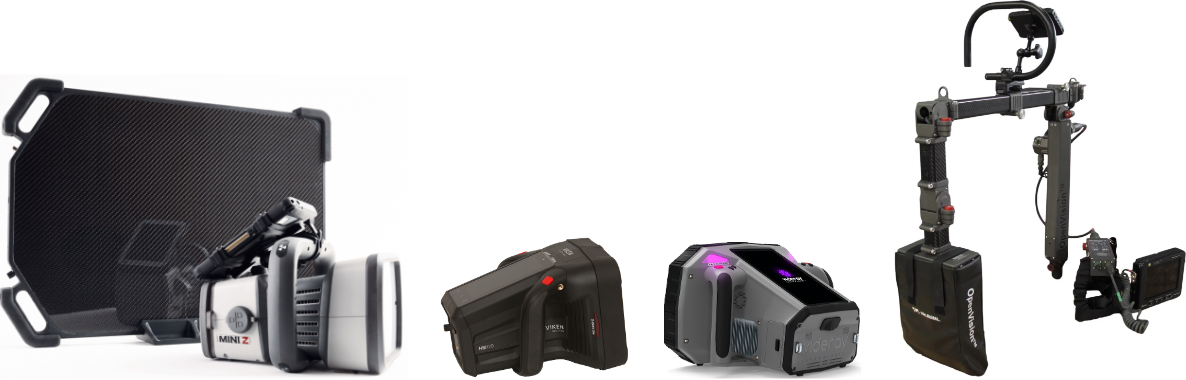
Handheld screeners (left to right): Rapiscan [archive], Viken Detection [archive], Videray [archive], QSA Global [archive].

Cargo screeners (left to right): Smiths Detection [archive], Nuctech [archive], Linev Systems [archive].


Transport screeners (left to right top to bottom): Smiths Detection [archive], Nuctech [archive], Linev Systems [archive], Rapiscan [archive].

Screeners capture data about living and nonliving objects in real time using electromagnetic radiation, built-in sensors, and software.
References to publications and examples:
- Multiview three-dimensional reconstruction by millimetre-wave portable camera [archive];
- Passive Millimeter Wave Detectors Market Survey Report [archive];
- Cargo & vehicle - x-ray inspection & radiation detection [archive];
- Viken HBI-120 Handheld X-Ray Imager [archive];
- Touchless Security Screening with Evolv Express® [archive];
- ThruVis - Standoff concealed object and threat detection [archive];
- Neural Guard Detection on Rapiscan 620DV [archive];
- HI-SCAN 6040 CTiX - A new level of Checkpoint Security [archive];
- Sistema de Inspección Nuctech de Vehículos Ligeros Seris Cs [archive];
- CIP-300 for vehicle inspection [archive];
- Sistema de inspección de carga/vehículo Nuctech MT0200BX [archive];
- ZBV Cargo and Vehicle Screening System [archive];
- "ZBV" - Z Backscatter Van [archive];
- VACIS® XPL Passenger Vehicle Scanning System [archive];
- DIY X-ray CT scanner controlled by an Arduino [archive];
- DIY X-ray backscatter imaging system [archive].
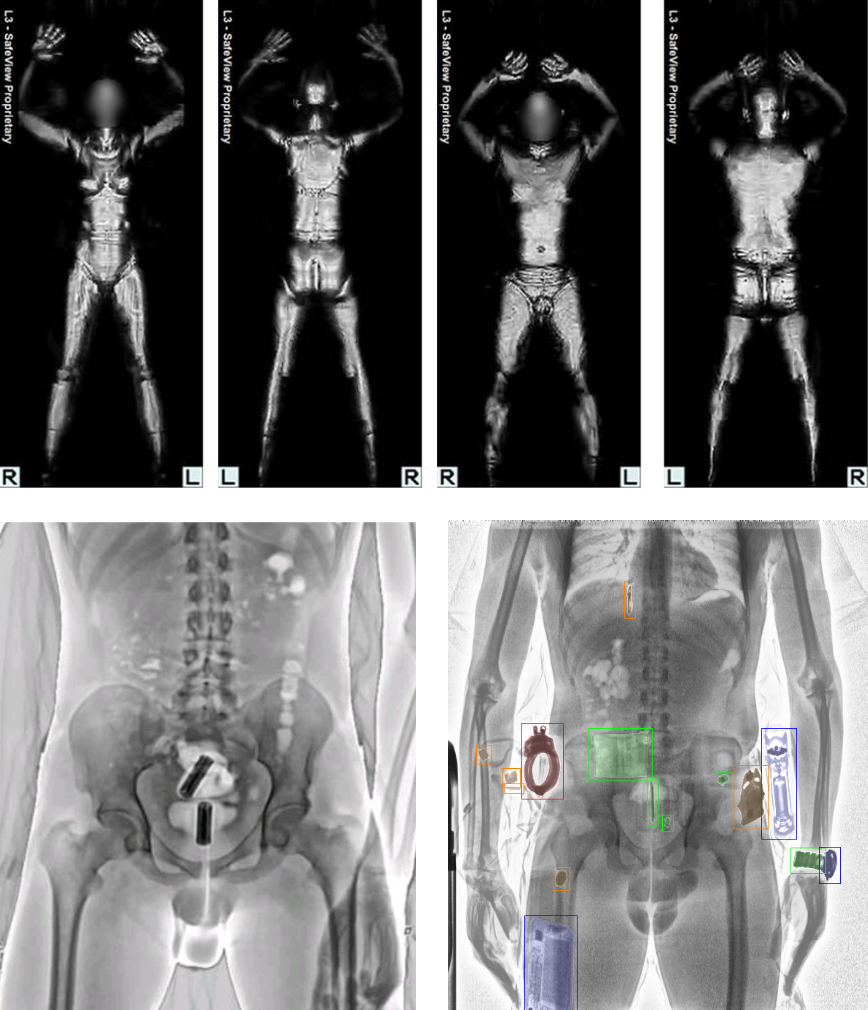
Examples of screening living objects with various screeners.

Examples of screening nonliving objects with various screeners.
Patent references:
- US6876322B2 — Concealed object detection [archive];
- US8232866B2 — Systems and methods for remote long standoff biometric identification using microwave cardiac signals [archive];
- US7811234B2 — Remote-sensing method and device [archive];
- US5507291A — Method and an associated apparatus for remotely determining information as to person's emotional state [archive].
Tomographs
Tomograph is an electronic device that reads the internal structure of living and nonliving objects and sends the data to a computer. References: Tomography [archive], X-ray microtomography [archive].
Tomographs include: magnetic resonance tomograph, computed tomograph. References: Magnetic resonance imaging (MRI) [archive], Computed tomography (CT) [archive].

Magnetic resonance tomographs (left to right): Siemens Healthineers [archive], GE Healthcare [archive], Fujifilm [archive].

Computed tomographs (left to right): Siemens Healthineers [archive], GE Healthcare [archive].

Computed tomographs for microtomography (left to right): RX Solutions [archive], Tescan [archive].
Tomographs capture data about living and nonliving objects in real time using built-in sensors and software.
References to examples:
- SIGNA™ Masters 2021 Live Scanning Series: Body imaging using AIR™ Coils on SIGNA™ Voyager [archive];
- What is Computed Tomography (CT) and how does it work? [archive];
- See the world’s first and only detector-based spectral technology with Philips IQon Spectral CT [archive];
- Deep Learning Reconstruction in CT and MR: a game changer? [archive];
- RX Solutions EasyTom S [archive];
- TESCAN micro-CT - KU Leuven Testimonial [archive].
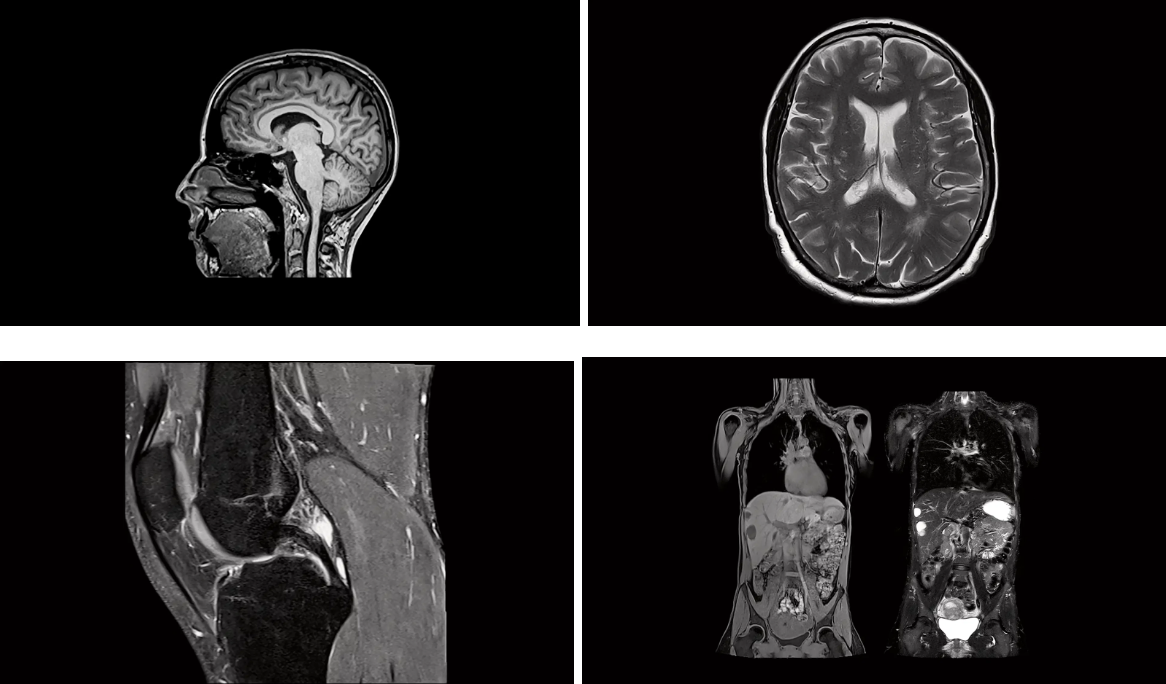
Examples of human tomograms produced by magnetic resonance tomographs.

Examples of human tomograms produced by computed tomographs.

Example of computed microtomography. Voids are marked in red, dense particles in blue.
Servers
Server is an electronic device for storing and processing data (working files, banking operations, paid orders, personal photos, videos, notes, correspondence, and more). Reference: Server (computing) [archive].

Intel servers. Manufacturer site: Intel® Server Products - CPU and server processors powered by Intel [archive].

Dell servers. Manufacturer site: PowerEdge Server Solutions | Dell Technologies [archive].
Servers are used in data centers (providers, operators, key companies).

Server room in Intel data center.
Servers capture data about living and nonliving objects in real time by data placement (on the server). References: Intel Management Engine [archive], AMD Platform Security Processor [archive], List of government mass surveillance projects [archive].
Worldwide, 1,327 exabytes of data were stored in 2021. Reference: Statista study: Global data center storage capacity used 2015-2021 [archive].

Volume of data stored in data centers worldwide from 2015 to 2021 (in exabytes).
Software
Software is a set of instructions that directs an electronic device how to operate. Reference: Software [archive].
All software that has a mechanism for data capture and transmission is a software element of observation.
In addition, software is subject to attacks from individuals, organizations, and governments of competing countries. References: Vulnerability (computer security) [archive], Computer security [archive], Mobile security [archive], Application security [archive], Browser security [archive], Drive-by download [archive], Cross-site scripting [archive].
For example, since 1999, more than 8,500 vulnerabilities have been publicly disclosed in Microsoft products. Reference to public database CVE Details: Microsoft : Products and vulnerabilities, CVEs [archive]. Microsoft site: Vulnerabilities - Security Update Guide [archive] (dates should be selected).

Publicly disclosed vulnerabilities of Microsoft products by year show a growth in the number of vulnerabilities as Microsoft develops. Reference: CVE Details: Microsoft : Products and vulnerabilities, CVEs [archive].
Products of other companies exhibit similar dynamics. Reference to top-50 technology companies by total number of distinct vulnerabilities: Top 50 Vendors By Total Number Of "Distinct" Vulnerabilities [archive].
References to statistical articles: 115 cybersecurity statistics + trends to know [archive], How Many Cyber Attacks Happen per Day in 2025? [archive].
Also, software may have hidden or side functions. For example, controlling the operating speed of an electronic device component (which can be used for information interception). Reference to scientific article with video demonstration: Fansmitter: Acoustic Data Exfiltration from (Speakerless) Air-Gapped Computers [archive], Fansmitter: Leaking Data from Air-Gap Computers (clip #1) [archive].
Embedded systems
Embedded system is software for managing a component of an electronic device (if the electronic device is simple, it may replace the operating system). References: Embedded software [archive], Firmware [archive], Microcode [archive].
Examples of embedded systems include: Intel Management Engine, AMD Platform Security Processor, Basic Input/Output System (BIOS), Unified Extensible Firmware Interface (UEFI), anti-lock braking system firmware, washing machine firmware, hard drive firmware, USB drive firmware, pacemaker firmware, remote control firmware, electronic watch firmware, etc.
Embedded systems capture data about living objects in real time by having full access to the key component of the electronic device (see the section "Microprocessors" for more details).
Operating systems
Operating system is software for managing an electronic device. References: Operating system (OS) [archive], List of operating systems [archive], Mobile operating system [archive].


Operating systems capture data about living objects in real time by accessing components of the electronic device, as well as saving user data and actions. Links to the privacy policies of developers of the most popular operating systems: Microsoft Privacy Statement (in Russian: Microsoft Corporation Privacy Statement) [archive], Apple Privacy Policy [archive], Google Privacy Policy [archive], Ubuntu Data Privacy [archive]. Link to the article: Even when told not to, Windows 10 just can’t stop talking to Microsoft [archive].
Operating systems use a single password for user authorization when logging into the computer and internal cloud services. This provides operating system developers with passwords to access users' computers. Link to the Microsoft website: Managing user identities and secure access at Microsoft [archive].
Applications
Application is software installed in an operating system to provide an electronic device with additional functionality. Reference: Application software [archive].

Logos of the most popular application stores (left to right): Microsoft Store [archive], App Store [archive], Google Play [archive].
Applications capture data about living and nonliving objects in real time by accessing components of the electronic device, as well as by saving user data and actions. References to privacy policies of application store holders: Microsoft Privacy Statement (in Russian: Microsoft Corporation Privacy Statement) [archive], Apple Privacy Policy [archive], Google Privacy Policy [archive].

Permissions granted to the Microsoft Word application include: camera, Wi-Fi connection data, device ID and call data, storage, phone, microphone, contacts, photos/media/files, credentials, and more. Reference to the application page on Google Play: Microsoft Word: Edit Documents [archive].
Applications display data received from components of the electronic device.
References to scientific publications, lectures, developers, and examples:
- (PDF) Emotion Detection from Text [archive];
- A review on sentiment analysis and emotion detection from text [archive];
- Text‐based emotion detection: Advances, challenges, and opportunities [archive];
- Emotion Detection and Recognition from Text Using Deep Learning [archive];
- (PDF) Emotional Text Tagging [archive];
- End-to-End Speech Emotion Recognition Project using ANN [archive];
- Speech Emotion Recognition Project using Machine Learning [archive];
- (PDF) Research of Emotion Recognition Based on Speech and Facial Expression [archive];
- Analysis of emotion recognition using facial expressions, speech and multimodal information [archive];
- Noncontact Heart Rate Measurement Using a Webcam, Based on Joint Blind Source Separation and a Skin Reflection Model: For a Wide Range of Imaging Conditions [archive];
- Model-based Region of Interest Segmentation for Remote Photoplethysmography [archive];
- (PDF) Video-based heart rate measurement from human faces [archive];
- Measuring Heart Rate from Video [archive];
- Video-Based Heart Rate Measurement: Recent Advances and Future Prospects [archive];
- Simultaneously video-based heart-rate measurement for multiple participants - an improved tiny faces approach [archive];
- Remote Blood Oxygen Estimation From Videos Using Neural Networks [archive];
- Non-Contact SpO2 Prediction System Based on a Digital Camera [archive];
- Non-contact measurement of oxygen saturation with an RGB camera [archive];
- Breeze: Smartphone-based Acoustic Real-time Detection of Breathing Phases for a Gamified Biofeedback Breathing Training [archive];
- Echoes [archive]:
- System of operative biometric search and automatic identification of a person by biometric characteristics of a face "APK VISIR" [archive];
- The system of control of psycho-emotional state of a person "VibraImage" [archive];
- How Are You Feeling? — Answered with A Real-Time Emotion Detector [archive];
- Evaluating the Emotional State of a User Using a Webcam [archive];
- Facial Expression Emotion Detection for Real-Time Embedded Systems [archive];
- Facial emotion detection using deep learning [archive];
- OpenFace 2.0: Facial Behavior Analysis Toolkit [archive];
- GazeRecorder: Online Eye Tracking Software [archive];
- Affective Mirror: Automated emotion detection through photoplethysmography & facial expression analysis [archive];
- Four-class emotion classification in virtual reality using pupillometry [archive];
- MEYE: Web App for Translational and Real-Time Pupillometry [archive];
- How now, smart browser? AI takes up residence on the web client [archive];
- Google is using AI to anticipate your web browsing needs [archive];
- Best Emotion Recognition Software of 2025 [archive];
- Sensing physiological arousal and visual attention during user interaction [archive];
- rPPG: Contactless heart rate measurement [archive];
- Motion Robust Remote-PPG (Camera-based heart-rate monitoring) [archive];
- Detecting Pulse From Head Motions in Video [archive];
- Camera-based health monitoring [archive];
- Camera-based non-contact health sensing [archive];
- What is RPPG (Remote photoplethysmography)? [archive]:
- VicarVision - FaceReader RPPG Module: Heart Rate & Variability Analysis [archive];
- FaceReader | Facial expression analysis [archive];
- FaceReader Classifications Demo - Automated facial expression analysis [archive];
- Viso | Video and audio recording [archive];
- Viso for AV recording, debriefing, and playback [archive];
- EthoVision XT | Video tracking software [archive];
- EthoVision XT: The video tracking software [archive];
- Google Fit [archive]:
- Celeno: Wi-Fi Doppler Imaging (radar) [archive]:
- IndoorAtlas (RTLS) [archive];
- An iPhone (X, 11, 12) 3D Scanner App that Works? (EM3D: Ethan Makes 3D Scanner) [archive];
- Polycam [archive]:
- Meshroom: Open Source 3D Reconstruction Software [archive];
- Sonarax (data transmission by using sound) [archive]:
- Umoove (eye movement tracking) [archive]:
- Learning to Find Eye Region Landmarks for Remote Gaze Estimation in Unconstrained Settings [archive];
- Pupil Detection, Gaze Estimation [archive];
- ScreenGlint: Practical, In-situ Gaze Estimation on Smartphones [archive];
- Deep Learning for Uncalibrated Gaze Estimation and Fatigue Detection [archive];
- Gaze estimation demo OpenVINO 2019 R3 [archive];
- Gaze360: Physically Unconstrained Gaze Estimation in the Wild [archive];
- Classroom Digital Twins with Instrumentation-Free Gaze Tracking [archive];
- The Mental Image Revealed by Gaze Tracking [archive];
- Object recognition and localization while tracking and mapping: Poster Wall [archive];
- Object tracking with monoSLAM: Ashmolean Gallery [archive];
- Vision AI video [archive];
- Online multi-object tracking via robust collaborative model and sample selection [archive];
- Unsupervised Learning of a Scene-Specific Coarse Gaze Estimator [archive];
- VicarVision - People flow analytics [archive];
- YOLO Object Detection (TensorFlow tutorial) [archive];
- YOLOv2 Real-Time Object Detection on KITTI [archive];
- 3D Object Detection and Tracking using YOLO4 in Autonomous Vehicles [archive];
- Manage the complexity of traffic - iSYS-5220 radar system performance video [archive];
- Real-time event detection for video surveillance applications [archive];
- Snap4City: Intelligent analytical application constructor for smart cities and the Internet of Things [archive]:
- Scenario: People Flow Analysis via Wi-Fi [archive];
- Data Analytics developed by using Snap4City solutions and tools [archive];
- Snap4City: how to create dashboard for smart city IOT (First part) [archive];
- Snap4city demo dashboard and smart city control room, 2021 [archive];
- Snap4City Overview per Smart City CINI 2021 [archive];
- Wi-Fi based city users’ behaviour analysis for smart city [archive].

Heat map of eye movement and gaze demonstration produced with the Brainsight app. Developer site: Brainsight [archive].
Patent references:
- US8230232B2 — System and method for determining a computer user profile from a motion-based input device [archive];
- US7222075B2 — Detecting emotions using voice signal analysis [archive];
- US6006188A — Speech signal processing for determining psychological or physiological characteristics using a knowledge base [archive];
- US6301370B1 — Face recognition from video images [archive];
- US20190146616A1 — Systems And Methods For Remote Tracking And Replay Of User Interaction With A Webpage [archive].
There are many other applications.
Websites

Screenshots of website pages (left to right, top to bottom): apple.com [archive], facebook.com [archive], trello.com [archive] (the last two).
Websites capture data about living objects in real time using device fingerprints, browser fingerprints, canvas fingerprints (HTML5), IP addresses, cookies, web beacons, and other technologies. Reference: Web tracking [archive]. It is also advisable to review the privacy policies of website developers.