
Operating principle
Brief description of the operating principle when impacting living and nonliving objects.
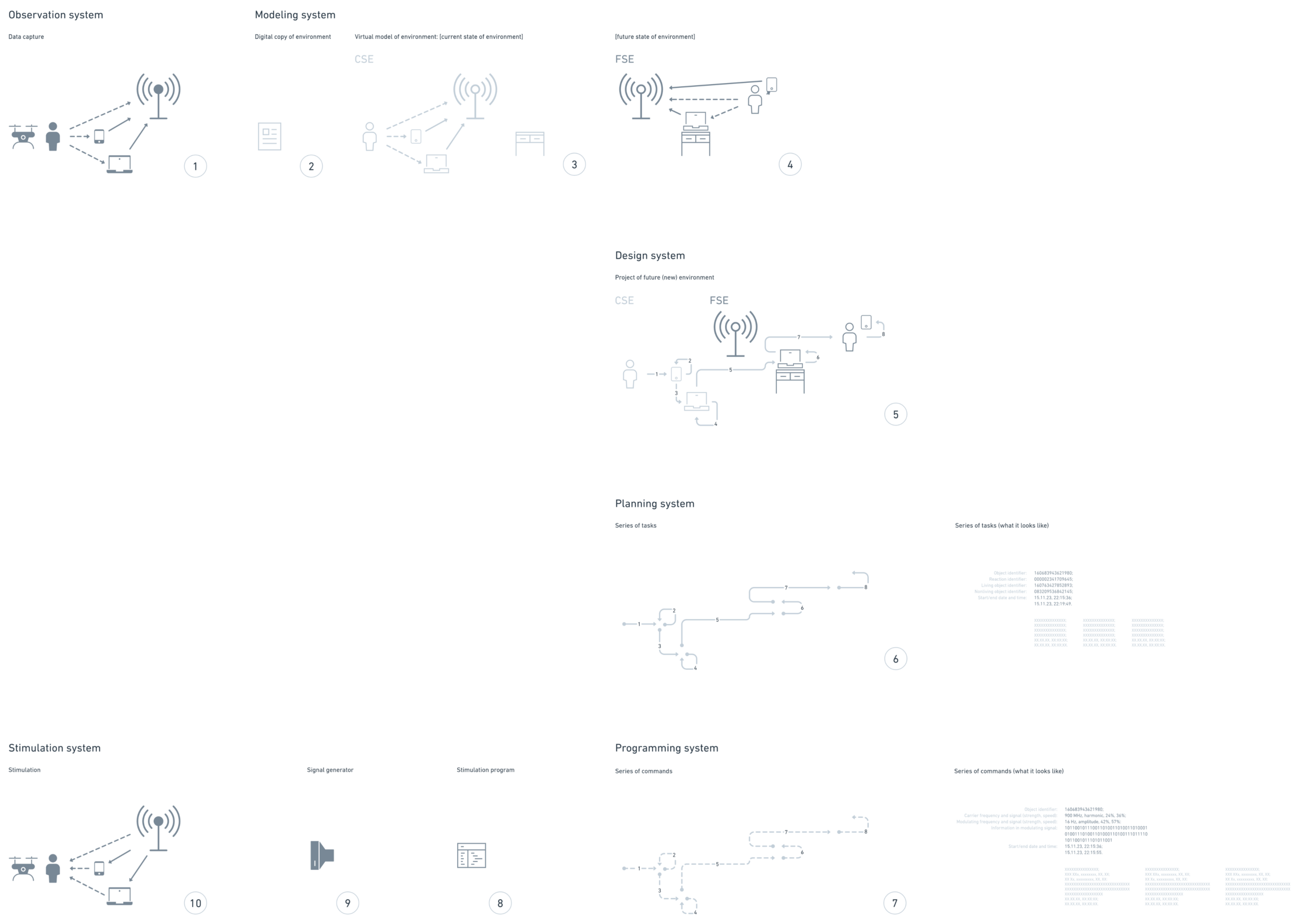
Operating principle when impacting living and nonliving objects (high resolution diagram, video demonstration).
Observation
During observation, data about living and nonliving objects are collected and stored (in automatic mode).
Observation elements capture:
Data about living objects, measuring:
- Body (biological characteristics);
- Experience (knowledge, skills, abilities);
- Thinking (singling out, switching, amplification of irritants);
- Reflexes (automatic responses to irritants);
- Reactions (cumulative responses to irritants: attention, state, action);
- Place (conditions, microenvironment, mesoenvironment, macroenvironment).
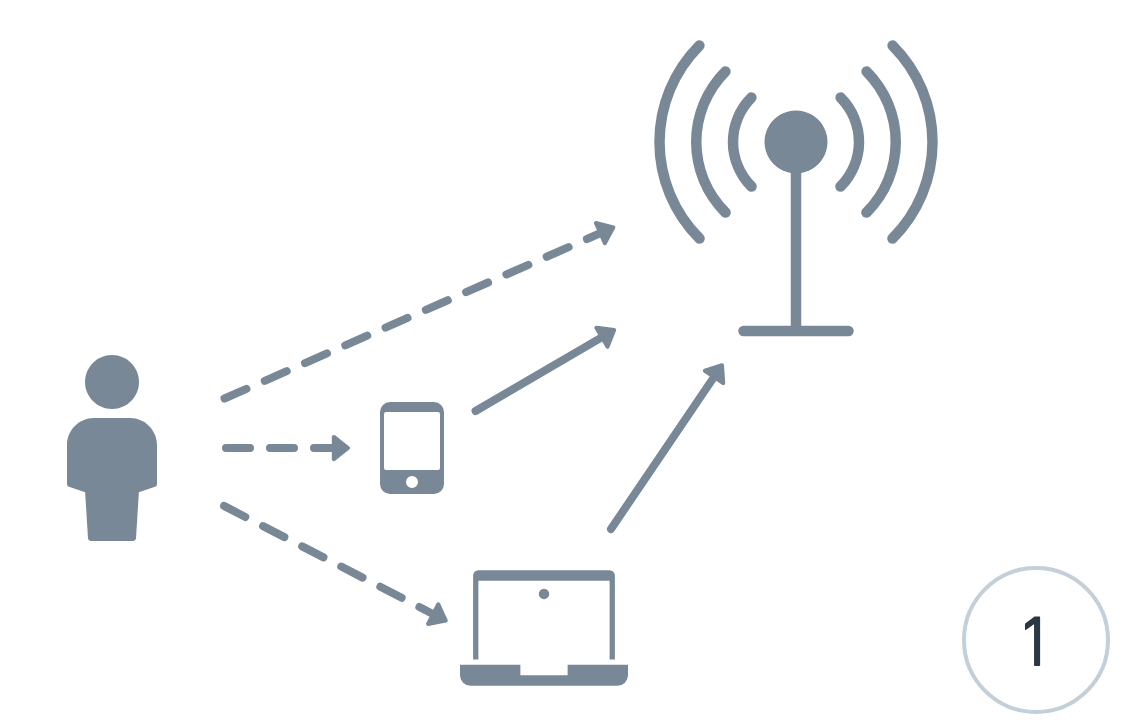
Data capture of living objects.
Data about nonliving objects, measuring:
- Characteristics (distinctive qualities);
- Configurations (arrangement of characteristics);
- Functionality (capabilities of executing operations);
- Reactions (cumulative responses to irritants: activation, operation, execution);
- Place (conditions, microenvironment, mesoenvironment, macroenvironment).
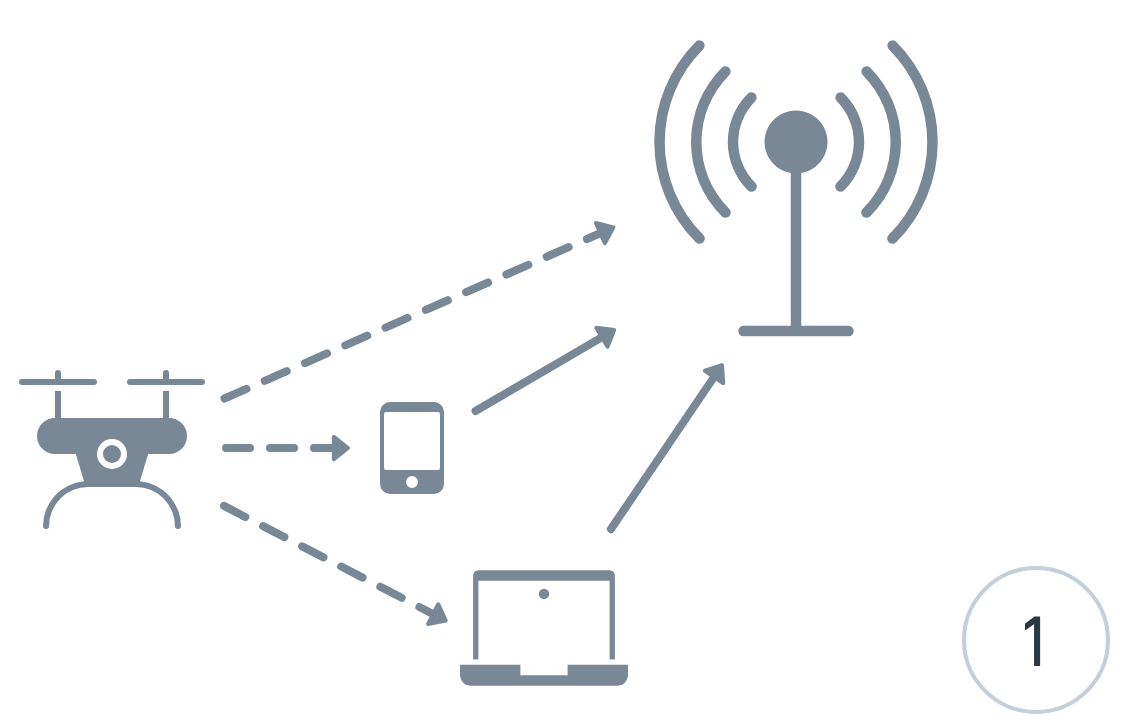
Data capture of nonliving objects.
Modeling
During modeling, a virtual model of the environment is formed (in automatic mode).
Captured data are combined into:
- A digital copy of the environment.
From which is built:
- A virtual model of the environment.
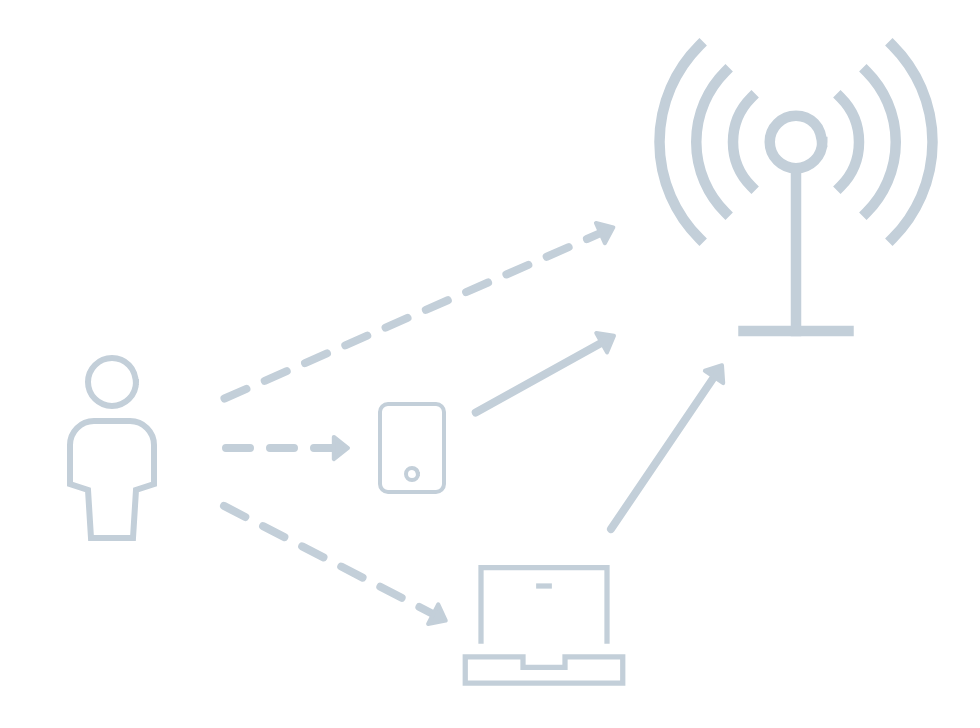
Virtual model of the environment.
Design
During design, a project of the future (new) environment is formed (in automatic mode).
The virtual model of the environment provides:
- The current state of the environment.

Current state of the environment (CSE).
And forecasts:
- The future state of the environment.

Future state of the environment (FSE).
Based on the difference between which is built:
- The project of the future (new) environment.

Project of the future (new) environment. Numbers denote series of reactions (forming a process) of a living object (for example, series of reactions 2 may simultaneously contain 50 reactions).
Included are:
- Living objects (distributed by location);
- Nonliving objects (distributed by location);
- Reactions (distributed by living and nonliving objects).
Planning
During planning, the project is converted into a plan to achieve the future (new) environment (in automatic mode).
From the project of the future (new) environment are singled out:
- Reactions of living objects (cycle: attention, state, action);
- Reactions of nonliving objects (cycle: activation, operation, execution).
Each reaction is described as a set of identifiers, resulting in:
- A task.

Task (consists of identifiers, dates and times).
From which is assembled:
- A series of tasks.

Series of tasks (forms a process). Numbers denote series of tasks (for example, series of tasks 2 may simultaneously contain 500 tasks).
Which is used to build:
- A plan to achieve the future (new) environment.
Programming
During programming, the plan is converted into a stimulation program for living and nonliving objects to achieve the future (new) environment (in automatic mode).
From the plan to achieve the future (new) environment are singled out:
- Living/nonliving object identifier (executor);
- Reaction identifier (performed by the executor);
- Living object identifier (with which the reaction is performed);
- Nonliving object identifier (with which the reaction is performed);
- Start/end dates and times.
Commands assigned to the living/nonliving object (executor) to achieve the reaction:
- Commands for eliciting: attention/activation;
- Commands for eliciting: state/operation;
- Commands for eliciting: action/execution.
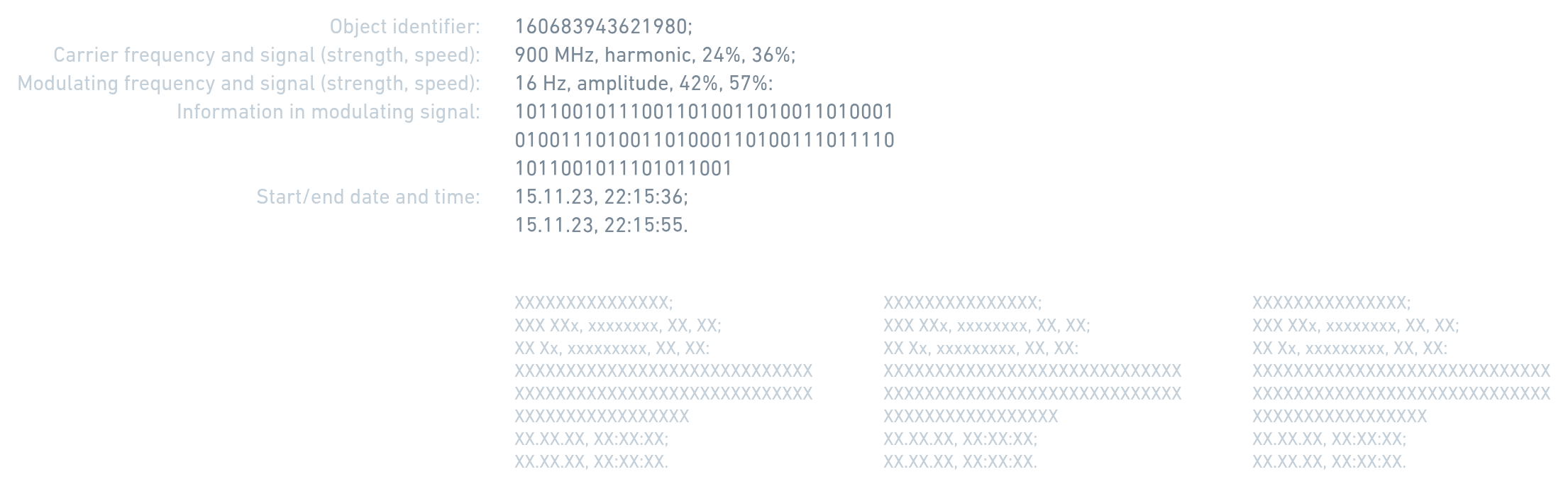
Command (consists of identifier, parameters, dates and times).
From which is assembled:
- A series of commands.

Series of commands (forms a process). Numbers denote series of commands (for example, series of commands 2 may simultaneously contain 5,000 commands).
Which is used to build:
- A stimulation program for achieving the future (new) environment.
Stimulation
During stimulation, repeated stimulation with a modulated signal and/or modulated electromagnetic field of living and nonliving objects is performed until the future (new) environment is achieved (in automatic mode).
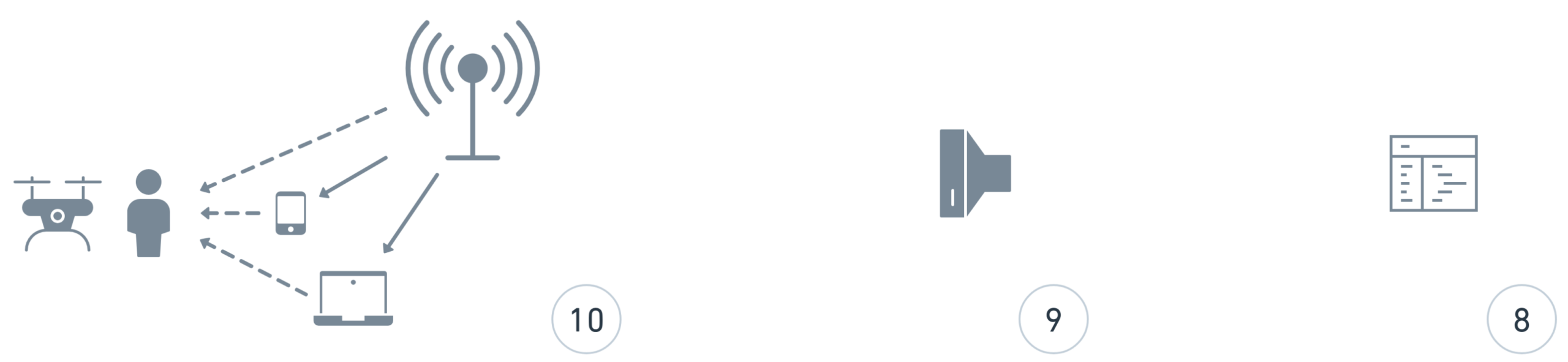
The stimulation program activates a signal generator, which produces a modulated signal transmitted to the living or nonliving object.
Stimulation produces:
Living objects:
- Eliciting: attention (internal, external, both);
- Eliciting: state (emotion, sensation, both);
- Eliciting: action (thought, motor, both).
This elicits:
- Reaction of the living object.

Stimulation of the living object.
A series of reactions of the living object is:
- A segment of living object behavior.
Nonliving objects:
- Eliciting: activation (function selection);
- Eliciting: operation (function initiation);
- Eliciting: execution (function holding).
This elicits:
- Reaction of the nonliving object.

Stimulation of the nonliving object.
A series of reactions of the nonliving object is:
- A segment of nonliving object functioning.
Performance improvement
During performance improvement, the effectiveness of commands is assessed and optimized (in automatic mode).
Performance improvement for each command is performed in a cycle:
- Command creation;
- Command execution;
- Stimulation (based on command);
- Reaction of the living object (based on command);
- Assessment of reaction of the living object;
- Creation of a new command…
The cycle then repeats.