
Environment change
An example of how the impact system changes the "Current state of the environment" to the "Required future state of the environment" (video demonstration).
A supercomputer produces a forecast of probable future state variants of the environment. References: Supercomputer [archive], Data [archive], Big data [archive], Artificial intelligence [archive], Simulation [archive], Artificial society [archive], Artificial life [archive], Simulated reality [archive].
The forecast of probable future state variants has identified the most likely changes ("Changes 2") leading to "Future state of the environment 2" (probability of achievement 98.4%), which has a low level of impact on other processes of the environment (not required).
"Changes 4" lead to "Future state of the environment 4," which has a high level of impact on other processes of the environment (required), but the probability of changes to "Future state of the environment 4" (required) is lower than to "Future state of the environment 2" (not required).

Probable future states of the environment, among which the most probable is "Future state of the environment 2," and the required one is "Future state of the environment 4." Colors indicate levels of stimulation of other environment processes: red — low; orange — moderate; green — high (the example uses only 4 future states of the environment).
For the "Current state of the environment" to change to "Future state of the environment 4" (required), the impact system increases the probability of "Changes 4" to 100% (by 2.8%).
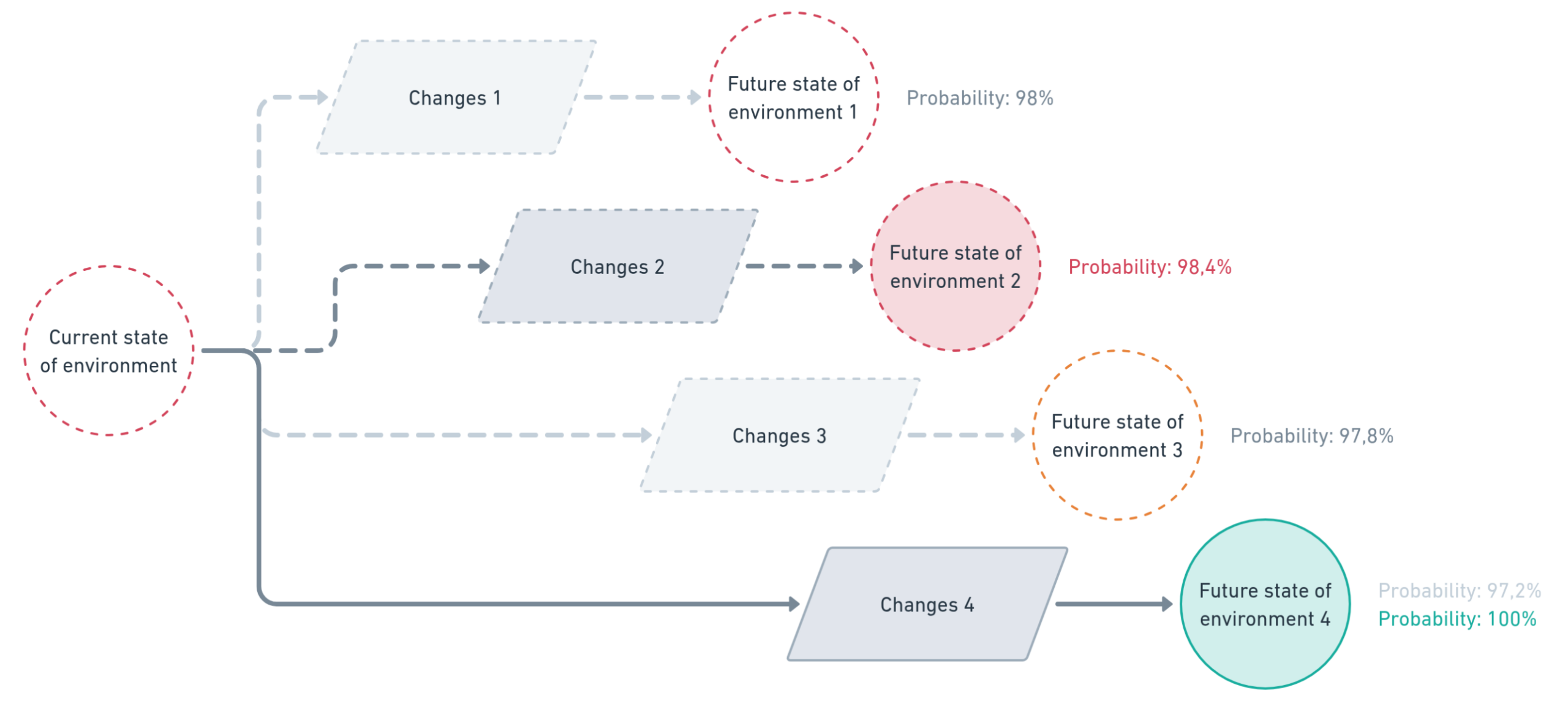
The impact system transitions the "Current state of the environment" through "Change 4" to "Future state of the environment 4" (required).
"Changes 4" to "Future state of the environment 4" consist of a set of micro-, meso-, or macroprocesses (depending on scale).

"Changes 4" to "Future state of the environment 4," consisting of microprocesses.
A living object in the "Current state of the environment" — in each situation — has a probability of initiating a limited number of reactions (the limited number depends on the situation).
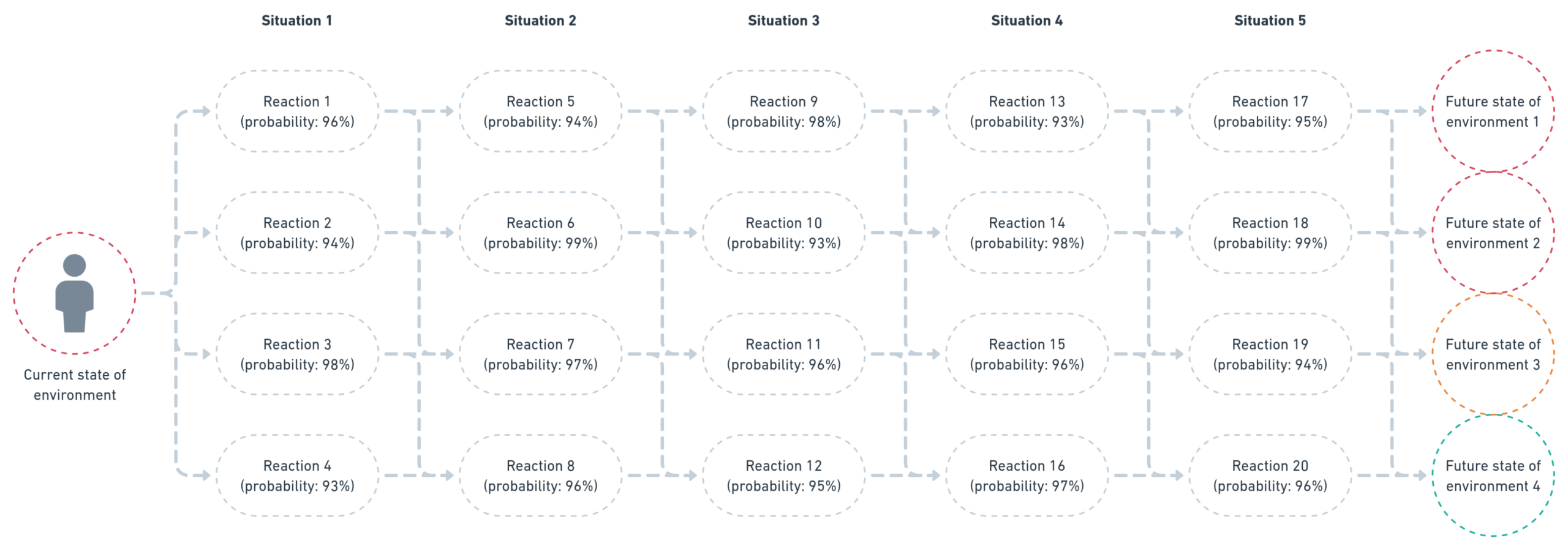
A living object in each situation has a limited number of reactions with exact initiation probabilities of each reaction (depending on processes of other living and nonliving objects).
Changes that transition a living object from the "Current state of the environment" to the "Future state of the environment 2" occur through the initiation of the most probable reactions, following each other.

The most probable reactions, following each other, that transition the living object to the "Future state of the environment 2" (not required).
For the living object to change from "Current state of the environment" to "Future state of the environment 4" (required), the impact system selects a series of less probable reactions leading to "Future state of the environment 4."

A series of less probable reactions leading to "Future state of the environment 4." But the probability of change to "Future state of the environment 4" (97.2%) is 1.2% lower than to "Future state of the environment 2" (98.4%).
To increase the probability of change to "Future state of the environment 4," the impact system stimulates the living object with a modulated electromagnetic field, raising the probability of initiating key reactions to 100%, increasing the probability of the living object's change to "Future state of the environment 4" to 99.4%.

The impact system stimulates the living object, increasing the probability of initiating key reactions to 100%, raising the probability of the living object's change to "Future state of the environment 4" to 99.4%.
To further increase the probability of change to "Future state of the environment 4," the impact system stimulates the living object with a modulated electromagnetic field, raising the probability of initiating both non-key and key reactions to 100%, which raises the probability of the living object's change to "Future state of the environment 4" to 100%.
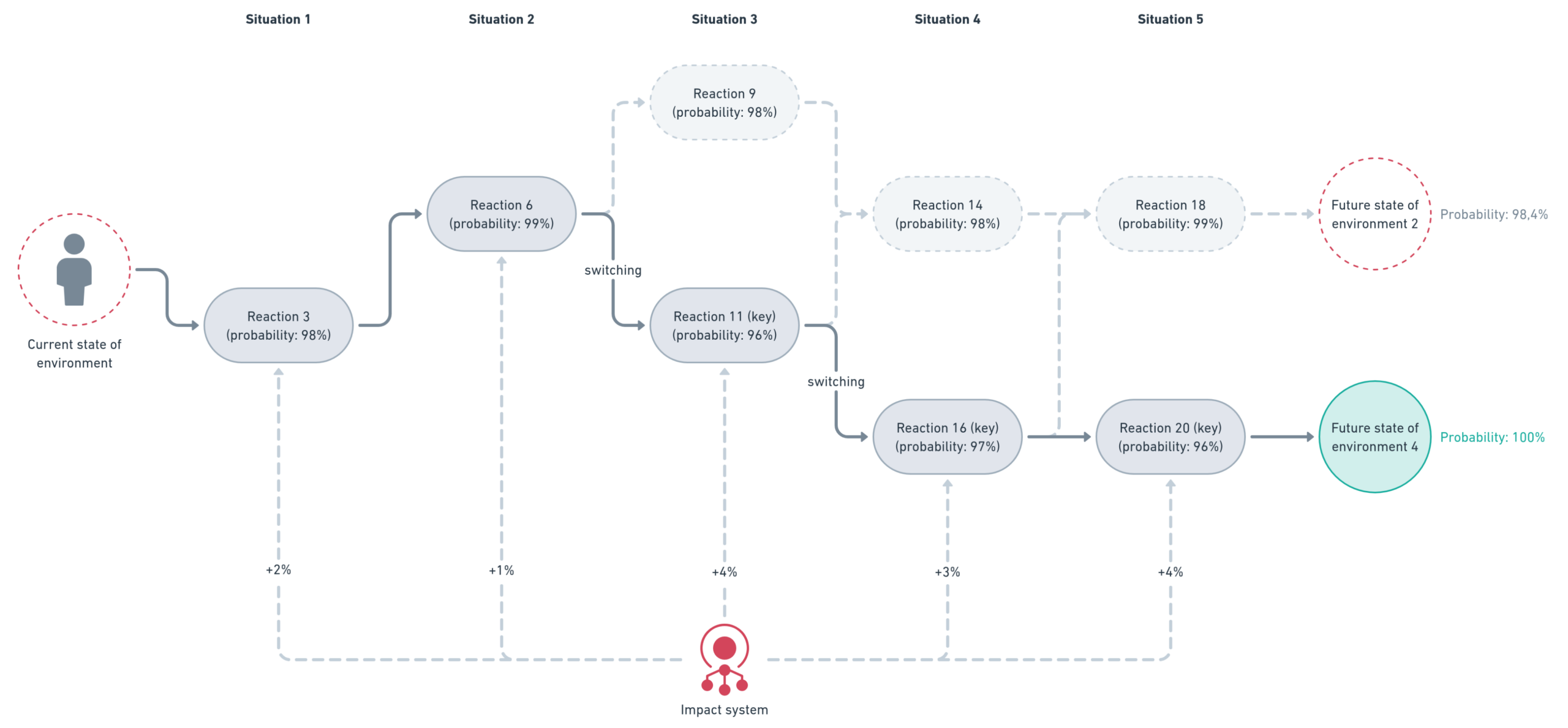
The impact system stimulates the living object, raising the probability of initiating non-key and key reactions to 100%, increasing the probability of the living object's change to "Future state of the environment 4" to 100%.
The impact system stimulates all living and nonliving objects (including special service personnel and presidents), organizing environment processes so that the "Current state of the environment" changes to the "Future state of the environment 4" (required).
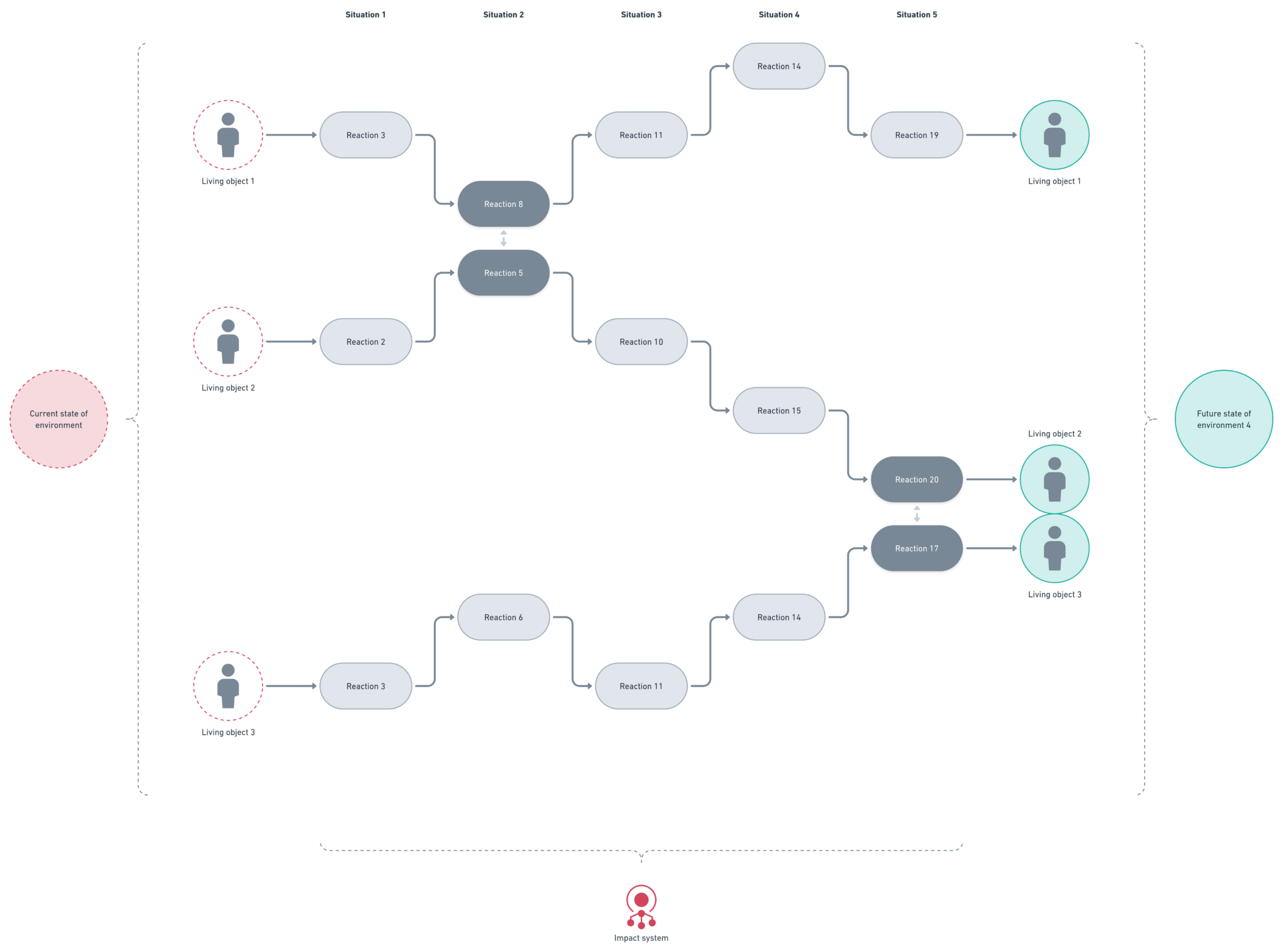
The impact system stimulates all living and nonliving objects, organizing environment processes so that the "Current state of the environment" changes to the "Future state of the environment 4" (required).